NWVT BKL Mini-Fest Recap!

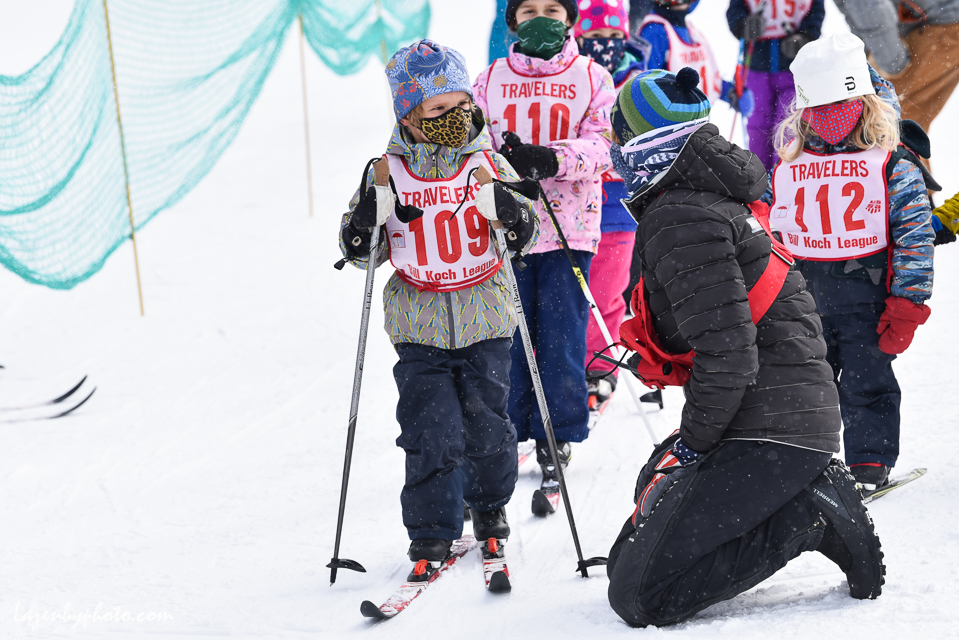
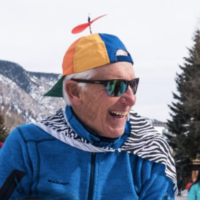
Coach Rosemary starts the Lollipoppers

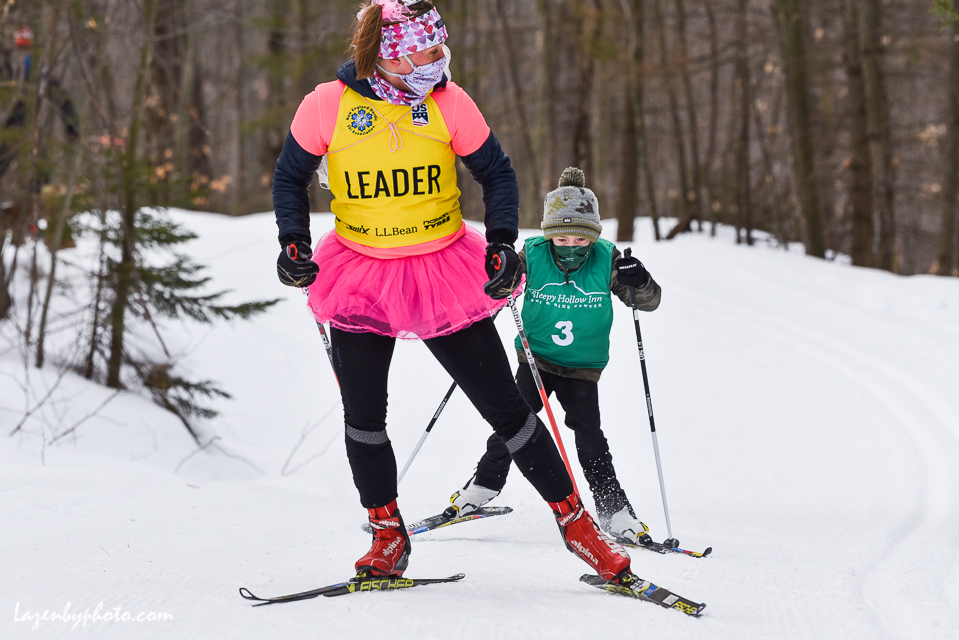
This past Saturday, 22 MNC BKLers joined skiers from Frost Mountain Nordic, Sleepy Hollow BKL and Mad River BKL for our first ever NWVT BKL Mini-Fest at Sleepy Hollow Ski Center. It turned out to be quite a fun and festive event with individual start races for all age groups and a self-guided mini-marathon that kids could do with their parents/caregivers. An Eli-Enman designed terrain park, a few jumps in the woods, announcing by our own Dave Priganc , and tutu-clad Juniors Hanna Holm & Emma Page leading out each age class all added to the festive atmosphere.

Hanna leads out the 1/2 race.


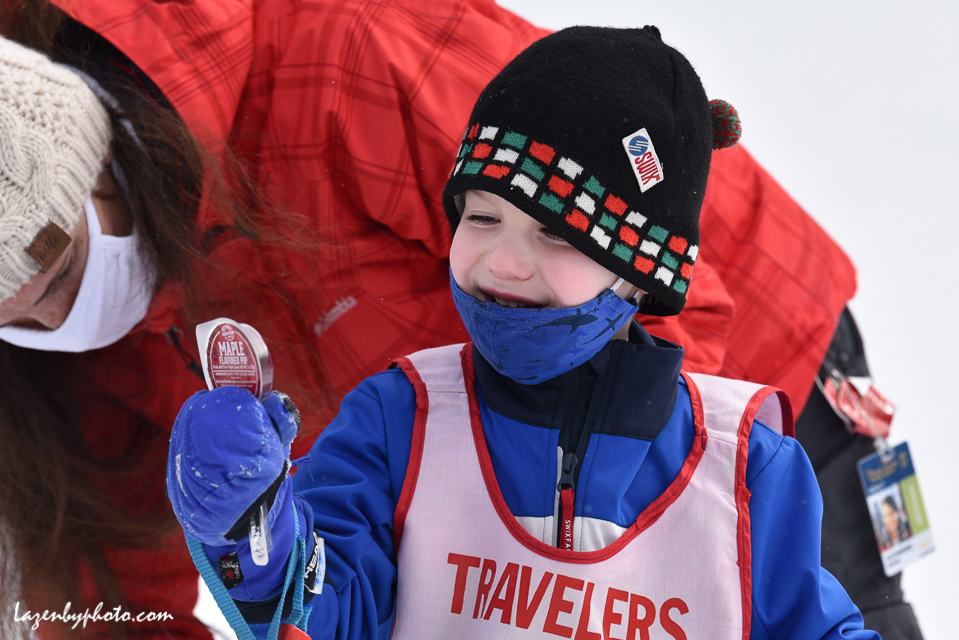
Lollipoppers Bella Altadonna and Ollie Labor both skied the race and received a special maple lollipop for their efforts.

Ollie is totally psyched for that Maple leaf lollipop!

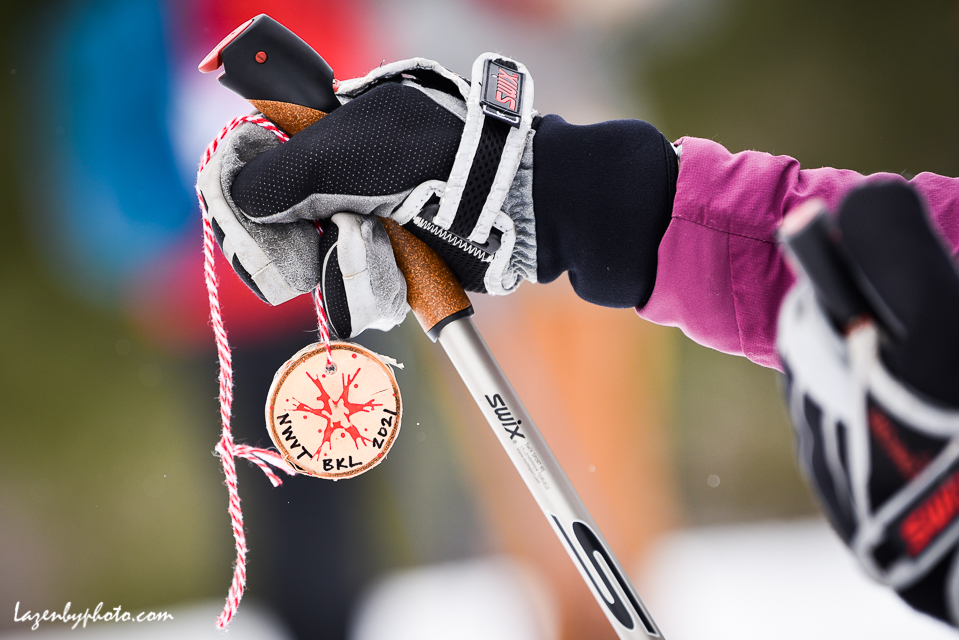
Racers in the 1/2, 3/4, 5/6 & 7/8 races received “Whittles” handmade by NENSA Program Director & Mad River BKL Leader Justin Beckwith and his wife, Brie Pike-Springer. These will make great holiday ornaments when the kids get tired of hanging them in their rooms!

In the Grades 1&2 race, MNC had speedy skiers Oliver Tremble, Mazzy Merrit, Finn Laber and Hazel Deane.  These skiers all skated the 1km race (it was “freestyle” technique) and most of them just learned to skate this year. What an awesome job they did!

In the Grades 3/4 race, Liam Vile, Oakley Crawford and Ansel Sprague all skied the 2km course, while Fiona Repp and Ellery Mitchell ripped it up for the girls.  The race ended over some twisty “whale bumps” and all these guys skied them with flying colors.

It was an all-girl crew for MNC in the Grades 5/6 race and Kate Carlson, Pearl Page, Ryley Morigeau, Brooke Greenberg, Tessa Diller and Hazel Fasching proved that MNC can really hold its own in this age group. It is no surprise that they took six of the top eight spots! Wow!

The Grade 7/8 Race is always very competitive at the New England Festival and this theme rang true for our Mini-Festival as well. There were 31 skiers in the race, 15 boys and 16 girls and some very fast times. For MNC, 7th graders Jonah Gorman and Pippa Diller did an excellent job in their races, giving the 8th graders some stiff competition.  For 8th graders Evey Slavik, Brady Morigeau, Niko Cuneo and Liam Repp, this was the last BKL race of their careers. The last festival is always a bit bitter-sweet for an 8th grader. BKL & the festivals are so much fun that it’s sad to be moving on. But it’s exciting to look forward to becoming an MNC Junior and going on to racing in high school and in the Eastern Cup series. Niko and Brady have been racing together for years, have often been relay partners and it was fun to watch them battle it out again in this year’s Mini-Fest. Liam just started racing this year, but has been getting faster and faster. Evey deserves a special shout-out: She just joined Arctic Foxes and started skiing this year. She liked it so much, she decided to try racing and she skied impressively well in this race! I am sure all four of our 8th graders will continue their skiing in high school in one form or another. I hope they have a great time and I can’t wait to see what they do!

All the photos above were taken by photographer John Lazenby and below is a link to more that he posted on his website. There are some excellent photos of MNC skiers, so be sure to check it out! John is also going to put the photos on SmugMug soon so that you may purchase photos of the event. I will post a link when he does.

Photos by John Lazenby

NWVT BKL Mini-Fest Race Results


State Meet Wax Notes

The VT State Championships are coming up Monday and Wednesday this week. MNC was on-site at Craftsbury both Friday and Saturday in prep for (and competition in) the Craftsbury Spring Classic race.

With temps and conditions looking to remain similar, here are some notes from our testing and waxing over the weekend.

Glide:

Stable firm and icy conditions are the name of the game at Craftsbury. Cycles of very cold nights, no significant new snowfall, and daytime temps in the low teens mean tilled tracks and some ice lining the classic tracks.

For underlayers, we have NOT found that graphite adds anything to ski speed.

Traditional blue glide waxes should work well. We used Briko BP Blue wax over the weekend, but also had strong test results from SkiGo XC Green. More familiar solutions like Swix CH5 and Toko Blue can provide a great first step.

For NF glide top layers we have liked both Rode RL Cold liquid as well as Rex G41 spray. In current conditions, waxes like Ulla Black and Toko Base Performance Blue spray are also speedy.

As temps warm up for the women’s races, a hard underlayer like CH5 is still recommended, to be followed by one warmer NF layer such as CH8 or Toko Red.

Bumping up the warmer topcoats to things like Rode RL Warm liquid, Start RG Red liquid, Ulla Red/Black, or Toko Yellow spray (if dirty snow) or Swix PS10 spray (if clean snow) can be great options when the snow gets slushy.

Structure: 

In the colder any icier conditions such as Saturday, a medium-sized linear structure (such as Holenkol’s larger of the two linear options) or Toko Blue structure was great on both tips and tails of classic skis for the tracks.

Structure should be tested on skate skis before being applied. It is easy to “over-structure” in corn snow and tilled ice: remember that just because the air temp is warm, structure should also be based on the snowtype.

Kick:

Although hardwax provided some kick, we found klister to be far faster. Guru Extreme 39 Hard was durable enough to race on for 5km without a binder klister. Swix KN33 Nero klister (added in the middle of the kick zone) provided additional grip at the expense of some speed. Swix KX30 ice klsiter gripped well but did not offer great glide, and Oslo waxes, while extremely kicky, were also extremely slow.

Other great waxes in this range are Rex Purple and Start Blue.

For Wednesday races as the heat increases, it may still be wise to begin with a purple klister but be ready to adapt with some universal klisters that can handle some ice and abrasion such as Rode Multigrade, Guru Extreme 39, Rex OV/Brown, or Swix KN22.

If things get very wet, klisters such as Rode Rossa and Guru Red excel.

Good luck to all the racers!

 

BKL Practice 3/02: CANCELLED

The weather has made conditions hard, fast & icy and unfortunately, Bolton will not be able to get out and groom things up until tomorrow. They are also experiencing high winds and cold temps up there today so we are going to cancel BKL.  Things should be better on Thursday.  Parents with Juniors should check Adam’s Junior Training doc for any last minute changes.

Hard’Ack Challenge

Masters and Juniors had a great time at the Hard’Ack Challenge race this past Sunday! It was a treat to get in some true spring skiing…racing in a T-shirt but still plenty of nicely groomed snow to go around. Thanks to Tyler Magnan and all the other volunteers who made it a great experience.

After the races we had a blast hitting up the local rope tow which operates adjacent to the Nordic trails on a small hill used for sledding, skiing, and snowboarding. It wasn’t just the MNC Juniors who were getting in on the action…the Enman and Tremble families were up on the slope with the dads rocking some smooth tele turns and the kids screaming downhill at unbelievable speed!

After some jumps and “nor-pine” skiing, a couple of us ordered a pizza from the parking lot, drove into town to pick it up, and enjoyed the pizza outside in the town park while it was still sunny and warm. Those after-race and after-training experiences where we all get to hang out as a group removed from skiing specifically are so special and they have been so infrequent in a season such as this…so it felt great to enjoy it and envision an upcoming year where we might be able to get back to more of those moments.

Here’s a short video of the rope tow action. No technique review footage from the race, only fun downhill ski footage on this occasion:


Distance ski fueling

This past week we had a couple chances for longer ski days, with school on break and some more free time during the daylight hours…oh, and good snow! On Wednesday during a 2-hour skate ski at Craftsbury I thought we would try something of a learning experience.

It was written down on the plan that everyone bring a snack to have during the ski, not just after. I picked up a box of granola bars ahead of time just to make sure we would all have some mid-ski fuel in case anyone forgot. Often on long skis I’ll bring along a box of fruit snacks to pass out, which serve to put in that little sugar-boost at the end of the workout…but really, we should be consciously consuming more calories than that if we’re out for over an hour.

I also started the workout with an announcement: I was going to use my heart rate monitor strap and watch to track my distance covered, average heart rate, and calories burned. A lot of us have heart rate monitors, but we seldom put them to use. Even in my case, it has become one of those things that I just put on because it “makes me feel like I’m a high-level athlete” and yet I rarely use the information it provides to the fullest.

Whether or not my device is accurate for calorie tracking, I don’t know. Mine is not the cheapest monitor out there, but it’s far from the most expensive. I’m guessing it tracks those calories through a combination of user-inputted stats like height, weight, age, and fitness level, along with workout data like average/max heart rate and distance covered.

“Counting calories” is a dangerous concept in and of itself. However I had a very basic hypothesis that I wanted to put out there: that we probably burn way more calories, even when skiing at low intensity, than we think we do.

At the one-hour mark in our ski, we took a short break to eat our snacks. I should note that Virginia made her own bars: she broke pieces off of to share and they were a huge hit. She sent me the recipe which you can find here. (Virginia noted that she used peanut butter instead of almond butter, FYI)

My own snack was just a common Nature Valley bar, the crunchy kind that comes with 2 bars per package. Both bars total up to 180 calories.

At the end of the ski, I concluded the workout on my watch and got the following data:


Again, the accuracy of the calorie count is not medically reliable. However, I have to assume it’s within a reasonable ballpark. And it’s worth noting that 800 calories is roughly the equivalent of 4 Nature Valley Bars burned over the course of that ski! Although this screenshot doesn’t show it, my average heart rate for the ski was 122 bpm, which is solidly in the “easy distance pace” category. I didn’t burn those 800 calories by busting my butt up the steepest hills or grinding out a grueling sweat-fest, although it was pleasantly warm and sunny out.

Calories are just a piece of the puzzle…there is a lot to be said about how fats, sugars, carbs, etc play into this whole discussion. As US Ski Team coach Matt Whitcomb likes to say, diving really deep into nutrition can be a point for the coaches to “defer to the experts” and so I will link this helpful article featuring Dr. Stephanie Howe Violett rather than try to educate on all of the ins-and-outs.

Right now, this is about keeping it very simple. Many of us only see calories as a negative and something to be avoided. In reality, they are fuel that helps us do the things we love! Ava recently brought back a candy bar from Finland where the nutritional info has “energy” rather than “calories” written on the label and I really like that as a way to think of it! Nothing makes that more apparent than their actual definition, which you may remember from 9th grade science class…a calorie is

“…the amount of heat required at a pressure of one atmosphere to raise the temperature of one gram of water one degree Celsius…”

Calories are literally energy for your body to use. Heat and energy that can raise the temperature of water! That’s some POWER that we can use for our skiing and daily life alike!

So, in addition to all the calories our bodies burn by just being living, breathing humans (literally…breathing requires calories, as does driving a car or even typing this blog post), my ski burned through an additional 800+ calories. By consuming about 200 calories mid-ski, I definitely helped to keep myself feeling good for longer into the workout. It also meant I was jump-starting the road to replenishing those 800+ calories at the end of the ski, when my body needed to get fuel back in order to recover and build back from that effort…after all, I have to ski again tomorrow. Nutrition labels often say they are “based on a 2,000 calorie diet” and yet skiers often need to be refueling with more than that given our activity levels.

Hopefully, this post and this simple experiment in data collection help share a simple and well-intentioned concept: skiing takes a lot of energy, so we need to always be fueled-up before/during/after to make sure we can get the most out of it.

I do NOT think we all need to be wearing monitors and tracking every last detail of every last workout, especially the calories.

What can we all do? Please don’t hesitate to follow the links or resources here to learn from/speak with some of the experts in the field. Read information that has been researched and reviewed, and keep a positive mindset on fueling! I’m not a sports nutritionist or a resource for dietary health in any way. For a great local resource, please don’t hesitate to contact awesome athlete/nutrition director/personal trainer/friend-of-the-Pugs Jamie Sheahan (jsheahan@edgevt.com).


Social media & sharing icons powered by UltimatelySocial