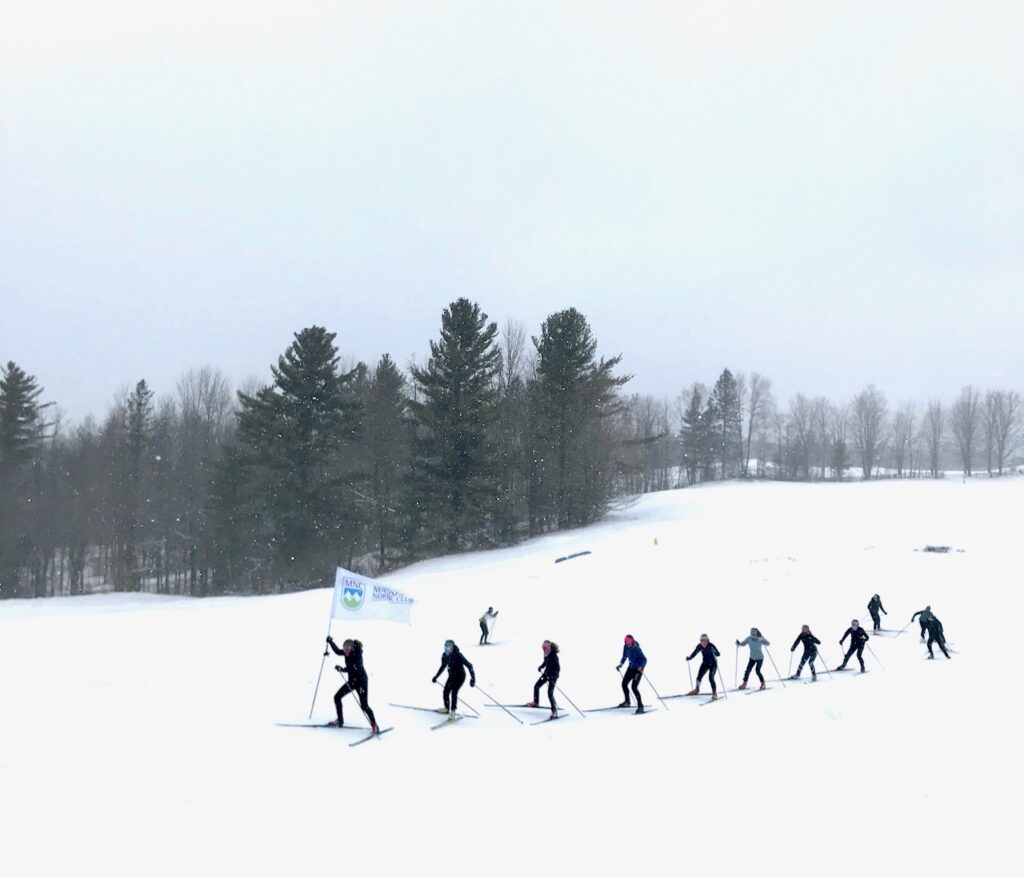
With the last of the trails beginning to wane and possibly one shot at a combination of temps, trail lengths, and late-season fitness, some of the MNC squad is gearing up for an “epic ski day” on Monday.
There is a lot of talk about doing a “100km day” but I want to stop short of publicly calling it that (although I may have been guilty of if this whole season). Not everyone will, and not everyone should, go out and ski 100km in a single effort. We should think of it more as a celebration of the ski season where we set out to ski as far as we can!
A lot of this was inspired by events of last March…when the World Cup was cancelled due to COVID, many of the top skiers in the world were left with nothing to do and a lot of late-season form and energy. What else were they to do? Many set out on insane ski days, some of which are documented here.
It looks like we may be possibly, maybe, eventually coming out of the COVID tunnel. With the last in-person race of the year on Sunday and a long break to look forward to after that (with the last of the legitimate ski trails probably melting-out by the end of next week) the time is now-or-never to give it our own shot!
Many of our skiers thinking of doing this are already asking questions about how they can best fuel for this ski before, during, and after. I’m no expert, but I’ve tried to do a bit of reading and research ahead of this endeavor.
The Day Before
If racing on Sunday, a really critical window is the 30 minutes immediately after the race. We want to be consuming lots of carbohydrates to replenish what our bodies went through in the race, as well as protein along with those carbs in order to help muscle rebuilding.
Chocolate milk contains that ideal 4:1 ratio of carbs to protein, so downing some of that right after completing the race will jump-start the recovery for the next day. But there’s way more than just a bottle of chocolate milk involved for optimal recovery. Below is a photo of some helpful charts from the book Roar by Stacey Sims. Note that these are just photos from my phone of the book, so sorry for any copyright infringement…
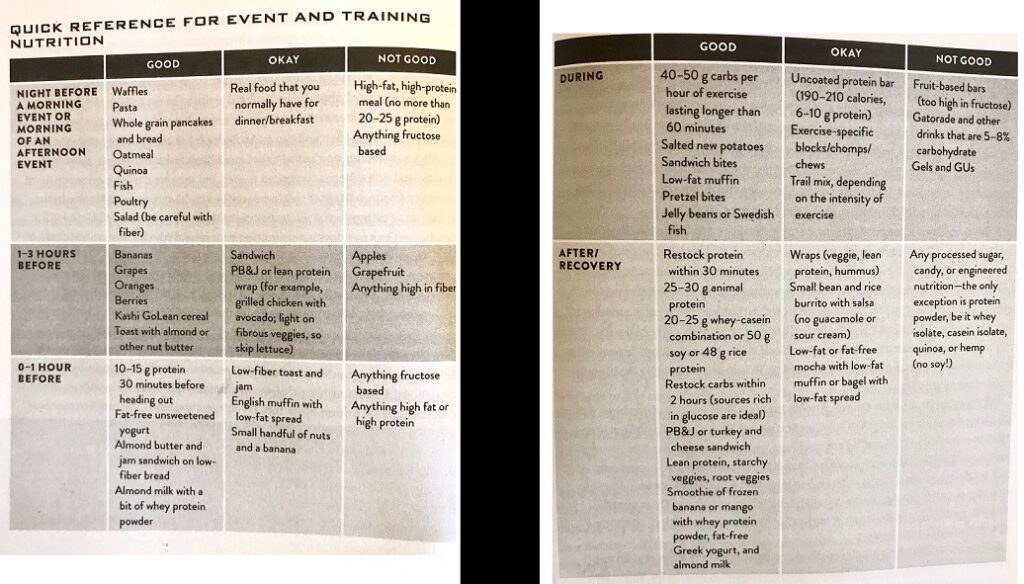
This chart can be useful for all sorts of training, be it weekly ski training, managing an Eastern Cup weekend with two races back-to-back, or preparing for an especially long or tough workout. Given the body’s high rate of burning both carbs and fat (especially fats as we focus on longer, easier distance pace for extended time on Monday, for example) we really need to be making sure we are fully fueled both the night before and the morning of our ski.
You’ll also notice that many of the “during” foods focus on salt/sodium. When we sweat it is important to replace more than just water, since our sweat is more than just water. Pretzels and potato chips are popular mid-effort snacks for ultrarunners because of the combination of fats and salts…not everything needs to come in a fancy “endurance” package like Gu or Clif products!
An article from Runner’s World suggests that long distance runners burn about 240 calories per hour while running, which of course fluctuates from person-to-person and is just a rough guide. On a recent test ski to check out calorie burning (as a way to make sure to replenish with enough of them!) my own watch suggested that I burned about 400 calories per hour. We weren’t sure how accurate that was, but given skiing’s more full-body involvement than running, as well as some more strength components, this 400 calories/hour seems within a good range of possibility. As referenced in the blog, this equals about 2 Nature Valley bars per hour.
It might not be very tolerable for your stomach to just go out and chomp down 2 crunchy, dry granola bars per hour on a long ski, which is why that fueling beforehand is so critical. Our bodies pull from those energy stores along with our fueling mid-workout. As the chart from Roar above shows, uncoated energy bars are only in the “okay” category during exercise. Mixing in some other types of fuel would not only add better mid-ski replenishment, but also be more palatable than just munching the same thing for hours on end.
So…a rough guide for people embarking on this big Monday ski:
- Replenish immediately after Sunday’s race, if you are racing. My personal plan is to down a chocolate milk within 5 minutes of crossing the finish line, and then go on a cooldown ski! It’s a good idea to have a sandwich, some lean protein, and fruit before even heading home.
- It’s also a good idea to try and get in some foods rich in antioxidants to fight off muscle soreness…beets and beet products in general are really popular for this, but other options include tart cherry juice or blueberries! Something to incorporate either with your post-race lunch or with an afternoon snack on Sunday.
- Have a great dinner on Sunday night. Go big on carbohydrates! This isn’t necessarily “carbo-loading” so much as just making sure your body has enough carbohydrates to provide a great and full fuel tank.
- Aim for a big breakfast on Monday: remember, this isn’t a race so it’s ok to start the ski with plenty in the system. This is where I might deviate from the Roar chart and be taking in some more carbohydrates closer to ski time, rather than switching to the usual smaller and race-stomach-friendly bites, gels, and fruits.
- Have a great selection of snacks for mid-ski…some bars, some pretzels or chips, some candy, a couple sandwiches, and extra water.
- Have hydration that is ideally more than just water. Sports drinks are ok, but we don’t want a huge sugar crash either. Better to dilute a bit if using Gatorade or Powerade. Let’s have extra water bottles on hand!
- I’m planning to go to the store and pick out a few post-ski treats. It’s almost a given that we will order some pizza to pick up afterward, but having something tasty and nutritious for right after will be huge. I may craft a delicious turkey sandwich with all the fixings, and a nice big cookie too.
Other notes for Monday’s long ski:
Temps will start colder and icier, but it’s supposed to get up to the 50s with sun. The snow will start fast and get slow and dirty. Here’s how to handle this:
- Bring sunscreen! We don’t want sun poisoning to make it even harder to complete this mission!
- Bring multiple pairs of skis. Even a clean, freshly-waxed pair of rock skis will be faster than a pair of race skis with 20+ km of dirty snow skied into them…moreso after it heats up.
- I will probably wax and bring 3 pairs of skis:1) a pair of training skis (for the first portion where the snow is fast no matter what skis I’m on)
2) my colder/universal race skis for when it starts to warm up
3) my white base slushy skis for the last part of the ski. Basically, switching to nicer and nicer skis as I get more and more tired, so that I have at least something going for me 🙂 - We can set up a “ski transition zone” for this, and we’ll also have NF spray wax to add boosts to our boards during the ski if needed.
- I may use the same type of running vest that many of us have taken to for long distance runs in the summer/fall. While a ski water belt is great and a vest/pack may look weird for skiing, I’ve found I am much more likely to remember to eat and drink consistently when there’s a hydration tube right at face-level and pockets with snacks easily accessible.
- I’m a diehard caffeine junky but I’m going to try and spread this out…saving the most caffeination until the last third/quarter of the effort.
- Want to get in on this craziness? Craftsbury, 8am on Monday the 22nd. Don’t forget your reservation!