April is a rest month for skiers, and for MNC’s official programming as well. In May, we start up with spring training, where athletes can choose 1-, 2-, or 3-day/week options. Those playing spring sports may opt for once per week in order to get in some longer distance days, or rollerski work. Those not playing a spring sport are encouraged to train 3x per week with the club, and mix in other activities on different days of the week.
It’s important to have a gradual return to training (especially running and rollerskiing) rather than jumping into everything all at once. But as May rolls into June, we will be increasing the duration and intensity of certain sessions.
You can check out the MNC spring training page, including registration links, below. Training begins on May 3.
Last April, the team got together for an informal run on Saturdays or Sunday in Jericho. Look for some of those options to pop up on the Junior Training Doc in the coming weeks. For info on adding running back into your schedule on your own, here is a document with a weekly progression and suggestions.
For many, the racing season has ended with the exception of the FIS race this coming weekend at Craftsbury. Now what? Is it time to lace up the running shoes and start accumulating mileage? Time to circle the track in pursuit of a PR this spring season? Time to hit the gym and pump iron?
During the dryland season we have rollerskiing, biking, hiking, and running to contend with. If we immediately jump into those other activities full-force our bodies are just not going to handle them well.When it comes to physiologically ending one season (skiing on snow) and preparing for the next (dryland) we need to be careful and thoughtful. We’ve been training on snow for months now, meaning we’re only used to one medium for activity: skiing (and strength training for some).
Ending one season also means transitioning out of competition and into a building phase. For those competing in spring endurance sports, this season is the hardest because there really is no building or rest phase: you go right from pushing yourself in one sport to pushing in another. This works ok with fall sports like cross country because additional rollerskiing and volume can be added, and racing in the fall is a great way to tune-up for ski season. But in the spring we are looking for a different stimulus. When the skis are first hung up, it’s time to be careful about when and how you go hard.
We work through our training logs in weeks and months, so it helps to use the calendar as a baseline. April is considered to be the skiing “rest” month. In this rest month we are still training, although it’s all about slowly getting used to those dryland activities (more on that below). What happens when the ski season ends and we’re only 2/3 through March?
We still have snow to ski on up at high elevations. If we have the means and the motivation, we want to extend the on-snow skiing as long as we can! If this means taking fischscales out into the backcountry, or exploring the mountains with skins and AT gear, that’s awesome. Don’t forget about some backcountry exploring or even “nor-pine” skiing.
Once we’re in nor-pine season, it usually means incorporating running 2-3 times per week on non-ski days. Like last year, we’ll probably start a weekend running group in Jericho/Williston, with a simple distance run and warmups increasing every week. Last year, we started with 3-4 miles and increased a little bit each weekend. When running, whether solo or with our group, it’ll be important to:
Start slow (even paces that might feel arduous…your legs have NOT done this in a while!)
Incorporate warmup drills and running technique progressions
Bring out bands for hip strengthening in order to prevent injury and strengthen our strides
In April though, there’s no shame in sitting inside on a rainy, gross day rather than forcing yourself to motivate for a run or bike ride.
Later into April and closer to May, it’s time to build back. Running, biking, rollerskiing, and strength are the main summer modes of training. Here’s a very generalized idea of how to incorporate them slowly:
Running
Start with 2 or 3 miles at a very easy pace, every other day. Gradually increase the distance of your runs first (no more than 10-15% increase in total mileage each week, which will feel small but adds up!). Incorporate band work whenever possible. Every run if you can!
Biking
Mountain bike trails are often too wet and muddy in the spring to ride. You can still get your MTB legs ready with some gravel riding, even if you don’t have a “gravel bike”. Pick some dirt roads, remember hi-viz clothing, and explore. Biking is the best way to do some longer spring workouts because it is not weight-bearing and has less injury risk.
Strength
In later April and May we really want to be getting into some functional, traditional strength training. However in the spring we can still get ready with a little bodyweight action. Focus mainly on the core, the upper back, and the hips. The MNC band warmup above serves as a good addition to any strength routine. And although it may bring back some Spring 2020 quarantine PTSD…you can find a basic solo strength workout video below.
Rollerskiing
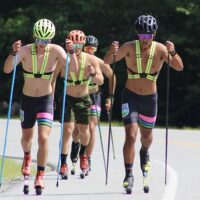
This is saved for last because in April it is the least-important! We often start rollerskiing in the very end of April, but not much before that. Many of our strength exercises keep the ski muscles engaged, and taking a break from the repetitive motion of skiing can actually be good. It allows us to work on technique areas by coming into the movements fresh, and the break also serves us well to get motivation up for a LONG stretch of rollerskiing. Breaking out the rollerskis isn’t recommended more than once per week in April.
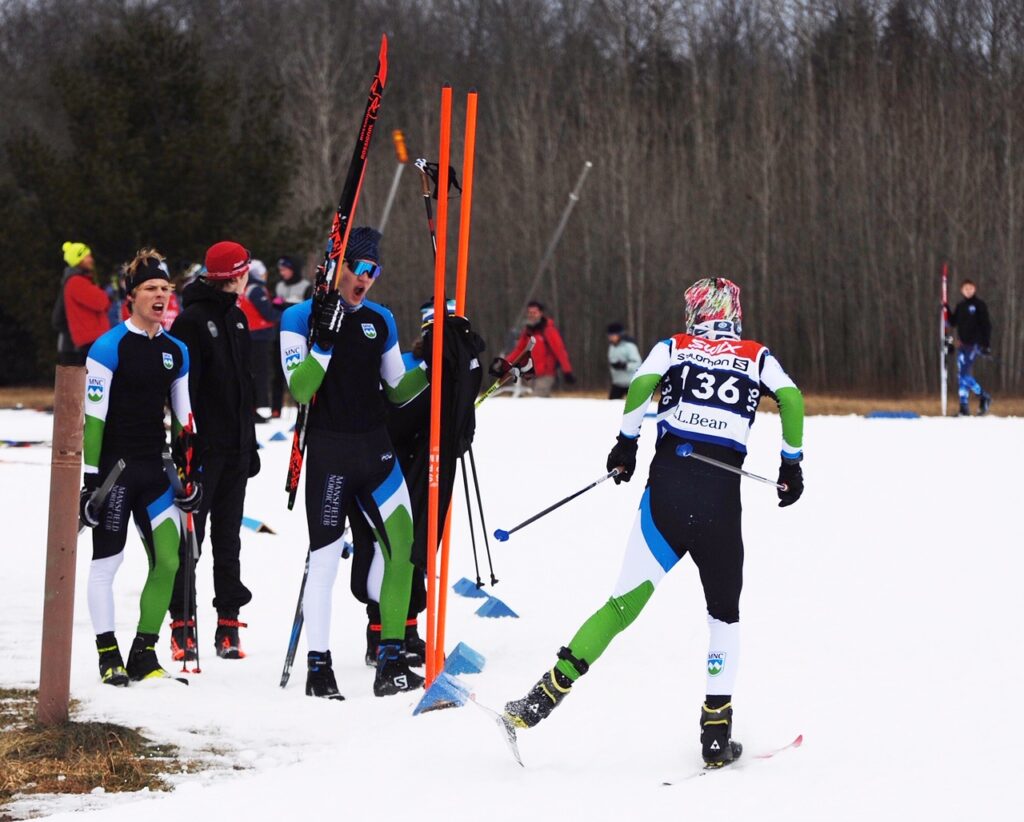
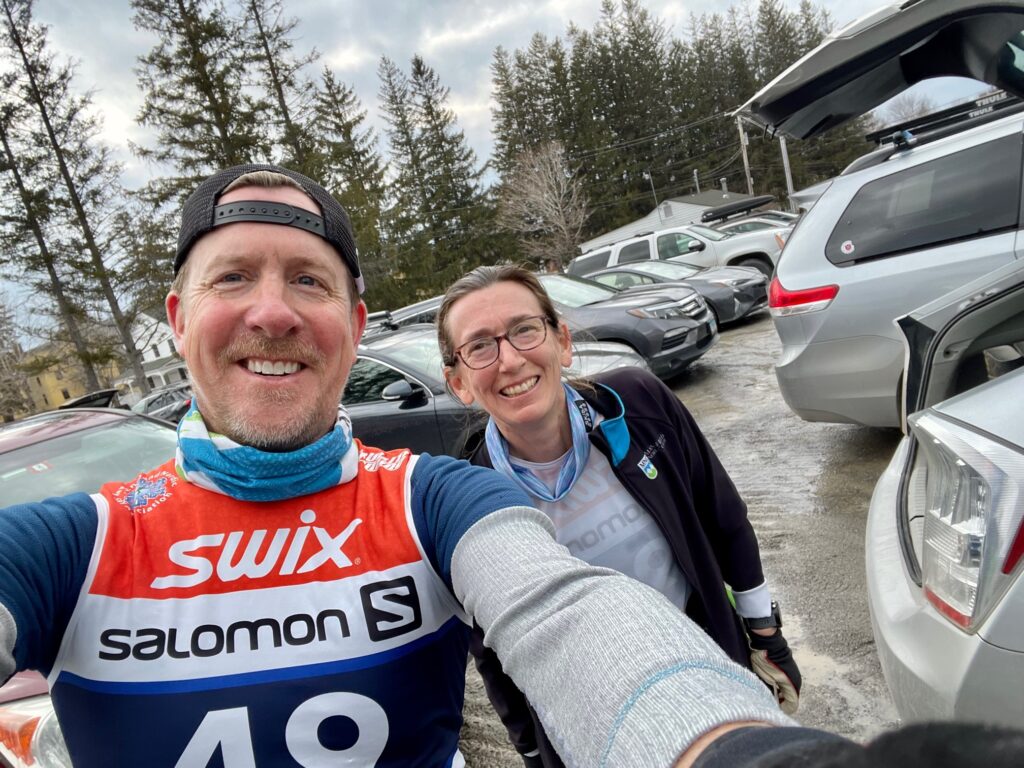
Some tough MNC racers took on 3 races in 3 days last weekend up in Ripton, as the Rikert Grand Prix brought in Olympians, college skiers, BKL racers, and more! There was a 3km skate prologue on Friday, a classic mass start on Saturday, and a hillclimb up the Middlebury Snowbowl on Sunday.
With MNC athletes ranging from recent BKL Fest competitors all the way to Masters racers, the club was showing our full representation!
With the events all concluded for the season, it seems hard to imagine anyone caught up to MNC in the NENSA Club Cup, which is great to see! Our skiers have truly raced hard and taken it to the start line all season long, across all age groups, and around the whole of New England and beyond!
Vermont has come away at the top of the Eastern High School Championships! This NENSA event brings together HS-aged skiers from across New England for a weekend of racing, and while this year was a bit of a different format to make the most of COVID safety (not to mention extremely marginal and dwindling snow) it was great to have the championships back on the schedule.
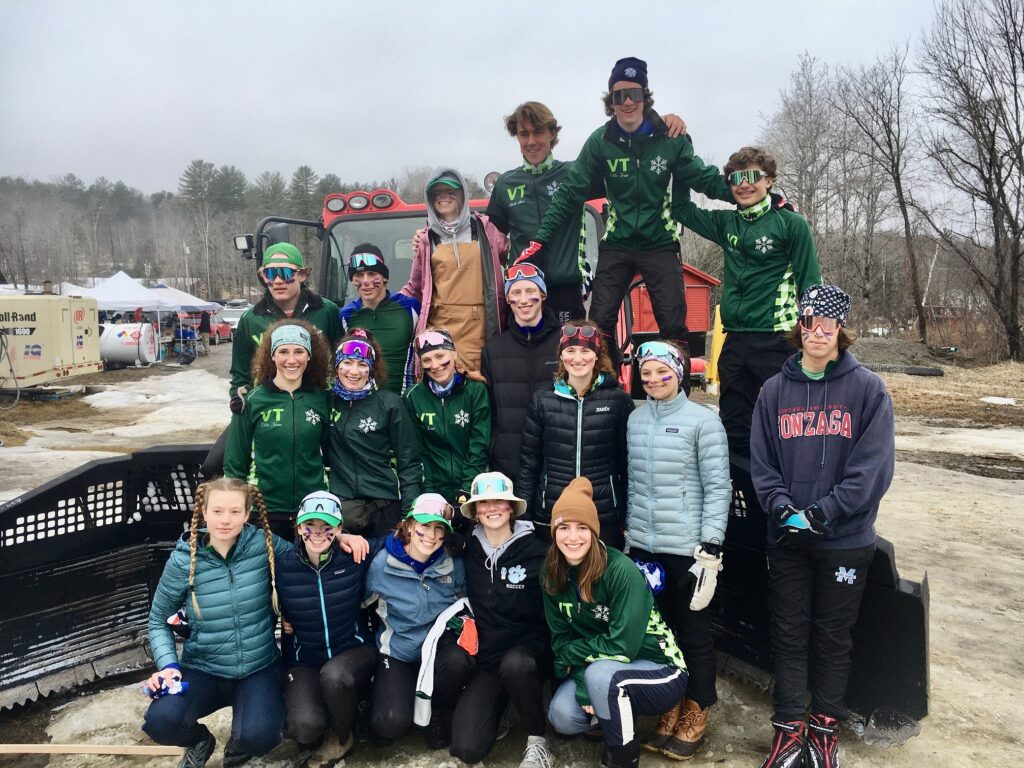
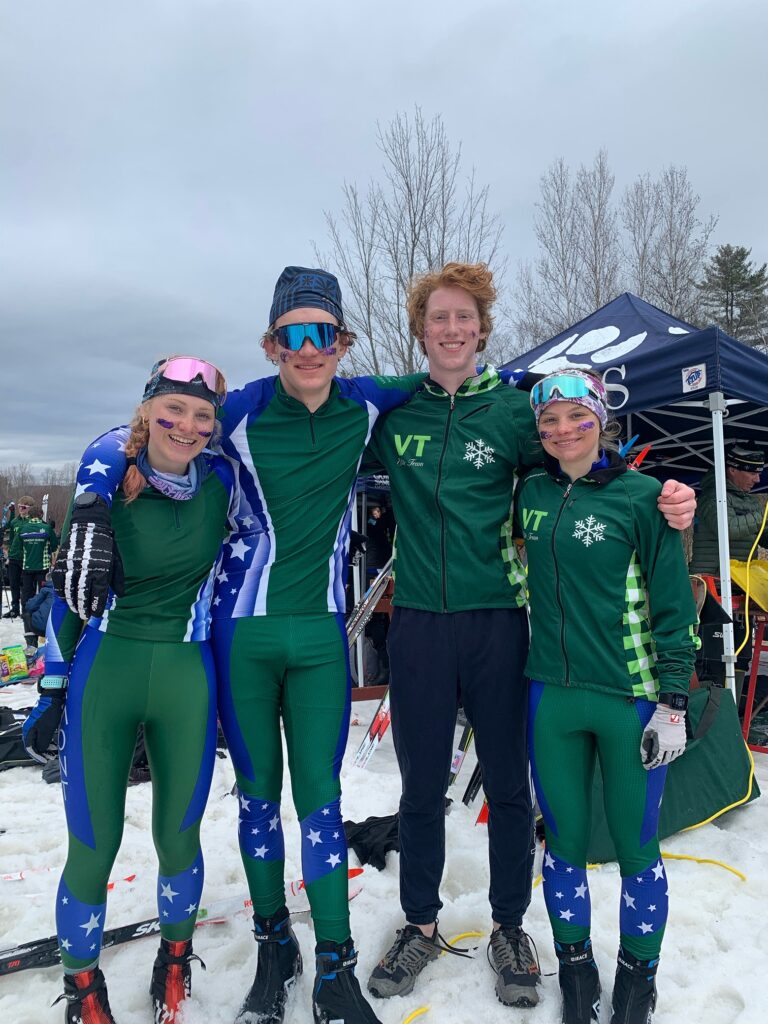
MNC skiers made up a large portion of the Vermont team thanks to great performances at the qualifier race day in Craftsbury. 18 athletes from MNC attended the event, with even more declining their spots for other travel, competition, or commitments. That’s some big representation, and these skiers helped Vermont secure a victory in the team score!
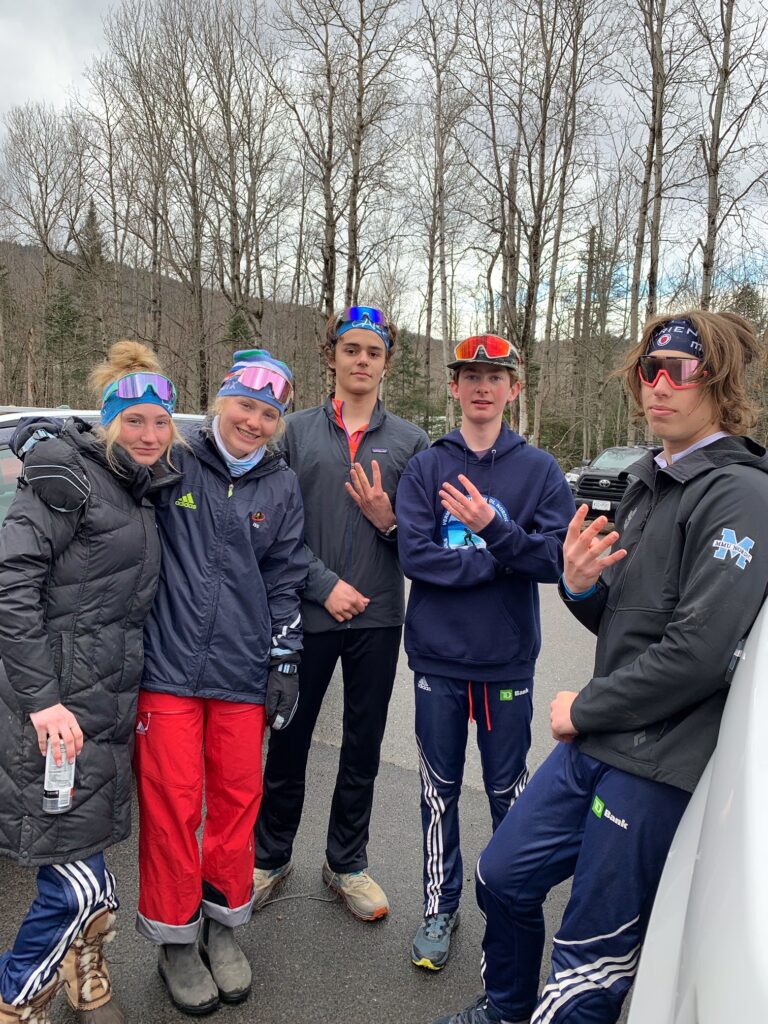
MNC squad in Farmington
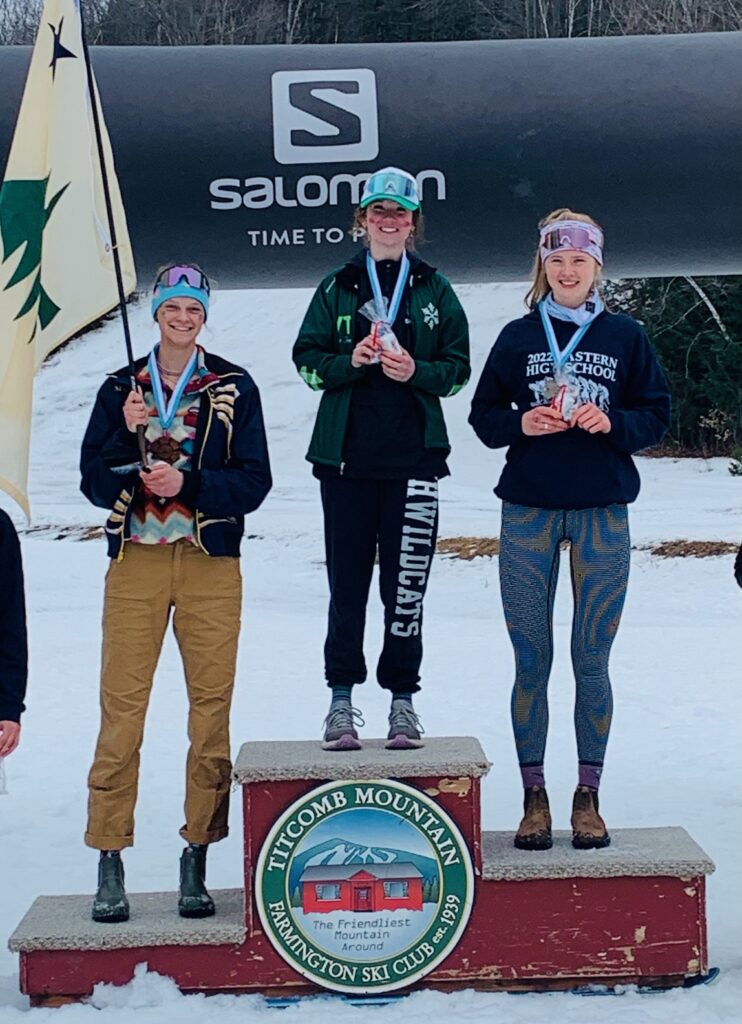
With a victory in the classic race and a close second in the skate sprint, Hattie was the overall champion! Many other strong MNC performances in the top 10 and beyond (like Nico’s 5th in the classic, Julia and Emma’s 10 and 11 in the women’s sprint, and Anders’ 7th in the men’s sprint) helped secure strong points, but at race events like this everyone is a contributor.
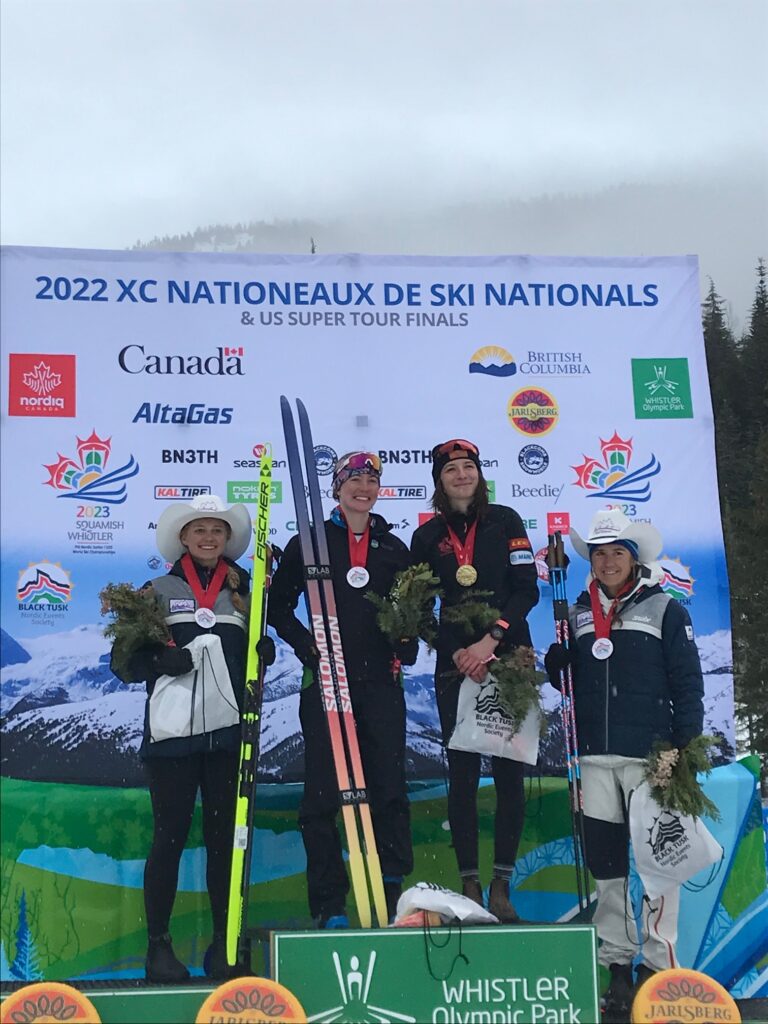
Hattie on top, alongside NE JN teammates Emma and Evie
The final event of EHS is always a team relay, with 2 men and 2 women making up teams from each state. MNC skiers had great relay legs, including a 3rd place overall finish for a team entirely composed of MNC skiers (Nico, Anders, Virginia, Rebecca). With a 1st and 3rd for their teams, Vermont handily secured a big win. It’s hard not to realize how strong our state is when it comes to Nordic skiing…clubs, high school teams, venues, training opportunities, race series’ and more all add up to an amazing ski culture that fosters growth and competitiveness on a legit scale!
Emma Page wrote a great piece for NENSA about her JN’s experience. It is linked here directly to the NENSA site, or you can take a look below!
Emma and her grandmother in MN!
I moved to New England two years ago and I am so grateful that I did. My experiences with New England racing and training have been amazing. This year, I went to all the eastern cups and met many wonderful people there who made me feel like I was a part of a tight knit and welcoming community of hardworking athletes, coaches, organizers, and parents. After traveling to Junior Nationals, I feel even more a part of this great group of people.
Out in Minnesota I definitely had my ups and downs. I had a few races that did not go as I had hoped, and yet, I was still able to enjoy my time. I believe that this is all due to the uplifting group of people around me. We all tried to communicate with each other on how our races went. If a race went well, we all congratulated and celebrated with that person. If a race did not go as planned, we worked together to lift that person up and help them get back to having fun. After a few tough races for me, I was revamped by the teamwork of the super fun relay races. One of my best races and most fun races ever was the relay and I heard from many other people that they share the same attitude towards that day of racing. The fact that the relay was so great for so many people on team New England shows that we are not only strong individuals but a strong and uplifting team.
This great attitude continued through the fun activities we did as a whole team or as an age group outside of skiing. I had tons of fun playing tag in our afternoon mobility, receiving some snow balls to the face, showing off my terrible bowling skills, and emptying the shelves at trader joe’s of all peanut butter and chocolate milk. I also can’t remember another time that I voluntarily sat in the hallway of a hotel for hours. During our free time, I really enjoyed resting in the hall and hanging out with my new friends. We spent so much time just talking and getting to know each other. It was awesome to meet people from all over New England and the world, with Elsa and Maddie from Sweden and Australia, who I had raced with in the past but had never had full conversations with.
Another uplifting routine we got into was the team meetings every night. Everything from sharing thoughts of the day at our U18 girls meetings to the awesome speeches/ pep-talks from our team leaders. Jack Lange truly made me remember how much this team cares about each other and our success as a whole group. I am really going to miss the fun times we had at JN’s and am looking forward to seeing everyone at the end of the season races, camps, and next race season.
I think that the immense success that team New England had is all thanks to the amazing coaches, wax techs, organizers, and team mates that we had out there. As a team, we not only succeeded in winning the coveted Alaska Cup but we showed other teams what real team spirit looks like! Thank you so much to everyone who supported team New England and let’s keep the cup for many years to come!