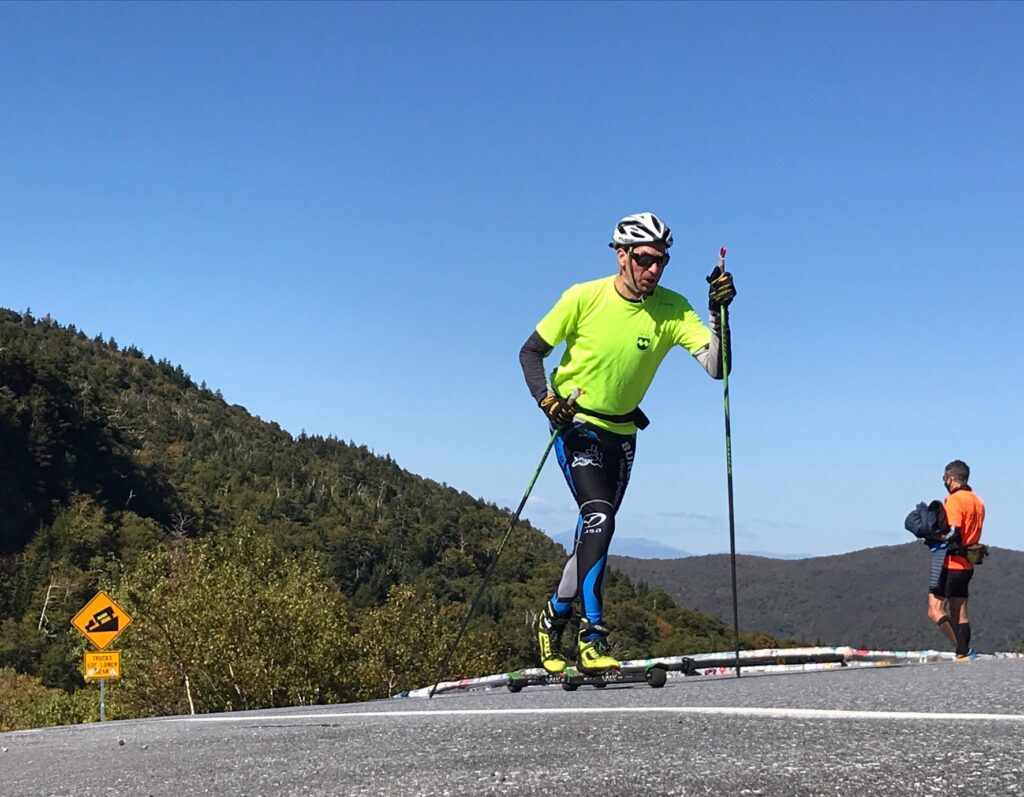
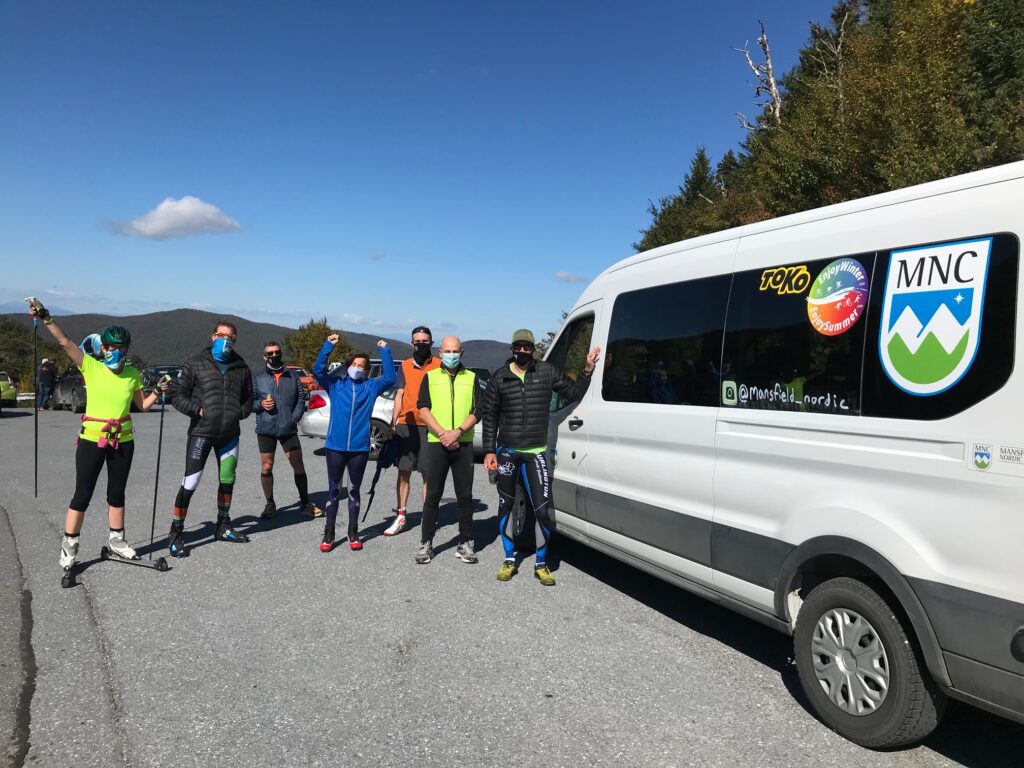
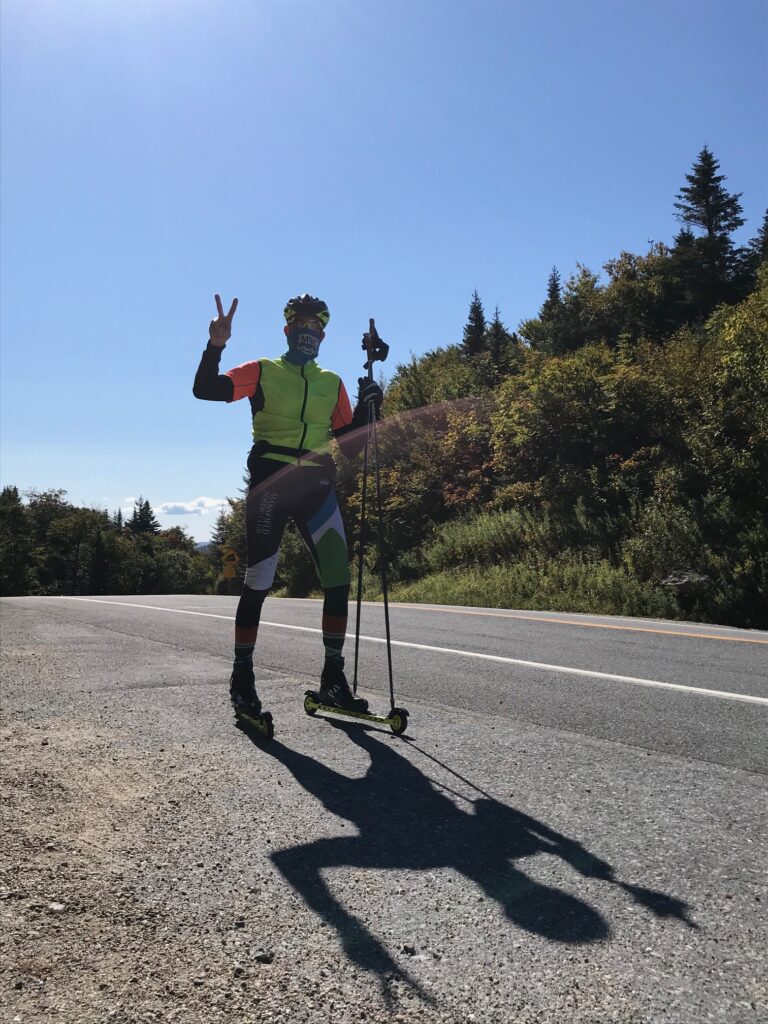
It was a crisp and cold but beautiful morning for some Masters to take on the West side of App Gap! Some classic, some skate, and a whole bunch of hill.
Check out some photos and video below!
 Mansfield Nordic Club
Ski coaching, training and playing in the shadow of Mt Mansfield for all ages and abilities
Mansfield Nordic Club
Ski coaching, training and playing in the shadow of Mt Mansfield for all ages and abilities
It was a crisp and cold but beautiful morning for some Masters to take on the West side of App Gap! Some classic, some skate, and a whole bunch of hill.
Check out some photos and video below!
You may recall that back in our second installment of 30/30s, I discussed increasing the workout in September. You can see that post here.
Well, September is more than upon us, and the workout this week is to indeed bump up those 30/30 speeds to 2×12 minutes.
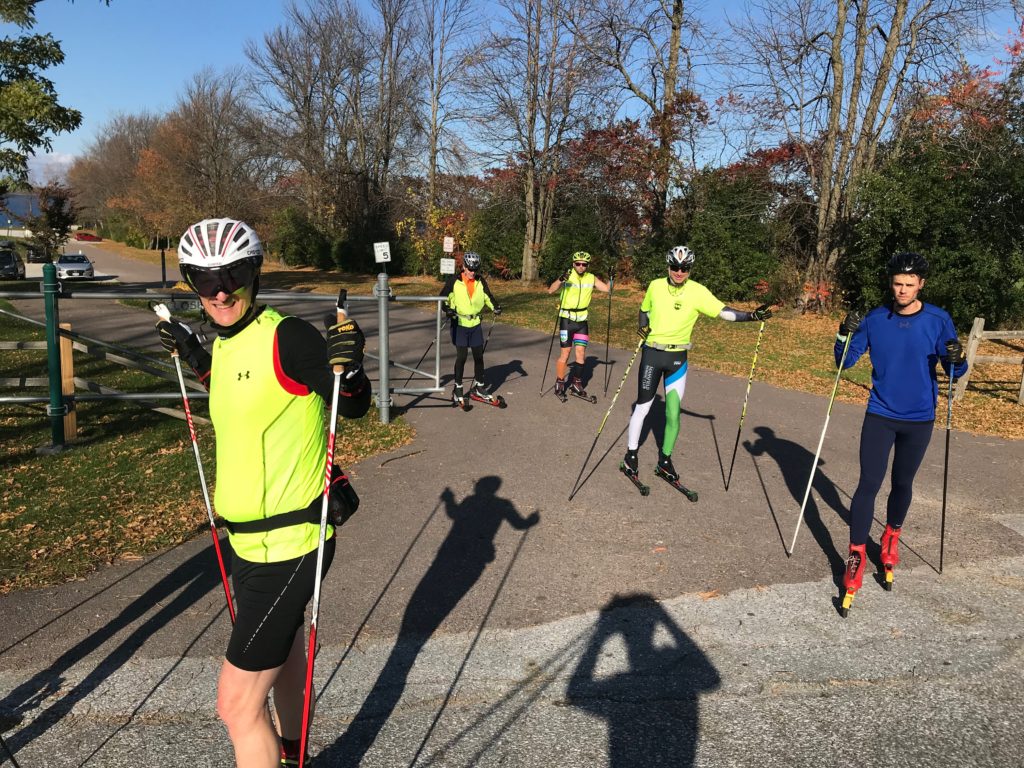
It’s recommended that rollerskiing be the primary mode of training for these now, as we move into colder temps and want to prime our bodies for speed, balance, and hard efforts in the vein of our winter sport. But running or cycling work too!
Roads and paths that offer mixed terrain are ideal, as you do not want full uphill climbs or fast descents. What you are looking for is a mix of speed over various terrain. Gradual uphills you can V2, steeper V1 sections, a fast flat to work on power, or even a gradual downhill to mix in balance. If you can hit all of the terrain types in one 30/30 workout you are off to a good start.
With 2 sets of 12 minutes, that’s 6 speeds per set. Be sure to give yourself a good 5-10 minutes of easy skiing between each set so that you can recover and feel ready for both!
Our sport exists in a realm of constantly-changing circumstances in even the best years: variable snowfall, challenging and changing road conditions, frigid temperatures to be exercising outdoors in, and more. We are used to expecting the unexpected. Being adaptable is the norm.
In the 2020/2021 season, we are all going to need to embrace that adaptability more than ever. Skiers in our area (high school teams, biathlon teams, and clubs alike) are faced with two distinct challenges: the COVID-19 pandemic, and the closure of the Camp Ethan Allen Training Site (The Range) to civilian organizations through at least December 31, and possibly longer.
Despite these challenges, MNC is committed to putting on programming at the BKL, Juniors, and Masters levels for the 20/21 season.
What’s a group of skiers to do? Lucky for us, we live in the state with the greatest Nordic skiing heritage and culture in America. Our surroundings provide us with amazing outdoor opportunities in every season, and in the winter months we have places to ski at every turn. With modern Nordic meccas like Craftsbury, and nearby snowmaking hubs like Sleepy Hollow, we might feel like we need to be limited to only a few centers of sport. But this winter might be thought of as a “return to the roots” of the sport, where small nordic centers and paths through the woods will guide some of our training and exploring.
Our geographical range is expanding…with club members stretching from Fairfax to Montpelier, the group that is “Mansfield Nordic Club” truly encompasses the northern half of Vermont. Between Fairfax and Montpelier lie skiing opportunities at every turn: the flat and twisting turns of Dac Rowe Field in Waterbury. The epic expanse of the Notch Road in Jeffersonville. The majestic views of Trapps. The deep woods of the Camel’s Hump Nordic Center in Huntington. The maze-like twists of Hard’Ack in St. Albans…
Located about as centrally as you can get for our group is another ski area that is working its way back onto the radar: Bolton Valley.
Bolton has hired a new Nordic director, Terry Solomon, who is keen to bring back regular grooming, early-season access when the snow flies, and events like a weekly race series to Bolton Valley. MNC has been in contact with both Terry and Adam DesLauriers, the owner of the mountain, to create a partnership between the ski area and our club. With what will likely be some of the most reliable snow within the closest proximity to many of our members, we expect Bolton to be filling many of the roles the Range has in the past. We are communicating with Bolton regarding discounted season passes and memberships for MNC skiers.
So what does that look like on a weekly basis?
Tuesday/Thursday Programming
BKL skiers should plan on Bolton being a hub for the season on Tuesday and Thursday afternoons, as well as weekend sessions for racers. With bridge updates on Picnic and Valley loops, gentler and more open terrain at Bolton will be accessible for skiers in addition to the more challenging and hilly trails on the northern part of the trail system. Plans are in the works for methods of having a lighted main area for games and activities. You can expect some adventures on the trails lit by tiki torches as well!
Afternoon Masters skiers should also plan on Bolton being a hub on Tuesdays and Thursdays.
Evening Masters will be based primarily at Sleepy Hollow, where we have communicated with the owners about allowing use of the trail lights from 6-8pm on Tues/Thurs evening. This will allow us similar training conditions to the Range without being too far from that original location.
Juniors should plan to be flexible! We will likely be dividing our Tues/Thurs sessions between Bolton and Sleepy Hollow, with potential days at MMU.
Other days of the week
Wednesdays, Fridays, and weekend days will look similar to years past. We have only ever had Range access on Tues/Thurs and this will be no different.
We will look at snow conditions, grooming status, snowmaking, and group size to determine where our BKL, Juniors, and Masters skiers will be on certain days throughout the winter. However, ALL of these ski days come with the caveat that things are different and require extra attention from all of us:
Health and COVID Considerations for MNC Members and Coaches
Established ski centers listed above will have their own COVID-19 policies in place to ensure safety of guests and users. It is imperative that MNC follow these guidelines to allow the safety of others, as well as to promote our own club’s responsibility and adherence to rules. As the largest group of skiers in Chittenden County (when all ages are accounted for) we pose arguably the greatest risk to these facilities when we arrive to ski.
The best source for information and requirements on this subject can be found in the NENSA Cross Country Promise.
Please refer to the NENSA COVID Considerations page and fully read/understand their guidelines as well. Many overlap with MNC considerations, and directly tie-in with the specifics of our sport.
It is fall and that means it’s time for BOUNDING. This can be one of the most enjoyable and ski-specific workouts there is, but it can also be purely the toughest type of workout there is. Nothing makes you feel fit for winter like some hard bounding intervals ending with sweat-caked eyelids while hunched over your poles.
A key with bounding is utilizing the “glide” with each footfall. I often like to say that bounding is like running with “more air-time”. In order to get more air, you need to come down with a bit more force on each foot, setting the wax and pushing into the next stroke. For a blast-from-the-past, here is a video I made half a decade ago (!) describing some bounding mechanics and techniques:
Maybe you can also pick out some familiar MNC faces on this video from 2016! The slow-motion shows good bounding mechanics for longer (2+ min) intervals: not so explosive that you run out of power after a few strides, but enough explosive motion in the lower body to be distinctly different than running, with that extra effort being used to “set the wax” in your imaginary kick zone…
The workout itself?
For this first bounding session prescribed in the Masters Workout of the Week, we will keep it short and work on the technique of bounding itself, without enough time or repetitions to get so tired that things fall apart. In fact, we will be interspersing running with bounding to feel the difference.
Warmup: 15-20 minutes easy jogging, with some harder pushes on any uphills
Workout: 4-6 times 2 minutes up a gradual hill. Alternate each interval between bounding (with poles) and running (without poles). Recovery time is an easy walk or light jog back down the hill.
Take note of the time for each interval. With bounding, it’s likely that the effort will feel harder but the distance you cover in 2 minutes is less distance covered than running. That’s probably a good thing, as it means you are putting more emphasis on power, setting the wax, and using good from than just simple running as far as you can!
Cooldown 15-20 minutes easy running
**********
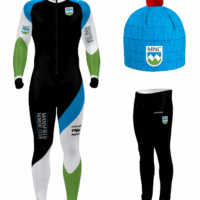
Get your MNC race suits and hats on our apparel page! You can buy or rent a suit, or grab a hat or headband to support our scholarship fund! Read More about “MNC Club Apparel”…
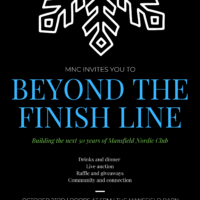
Join us on October 23rd as we celebrate MNC’s past…and look toward even more skiing, training, learning, and growing in the future! Read More about “Beyond The Finish Line”…
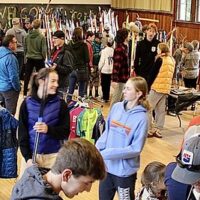
This year’s ski and gear sale is Sunday, October 25th at the Jericho Community Center, with dropoff on Saturday the 24th! Click for more. Read More about “MNC Ski Swap”…