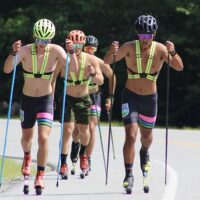
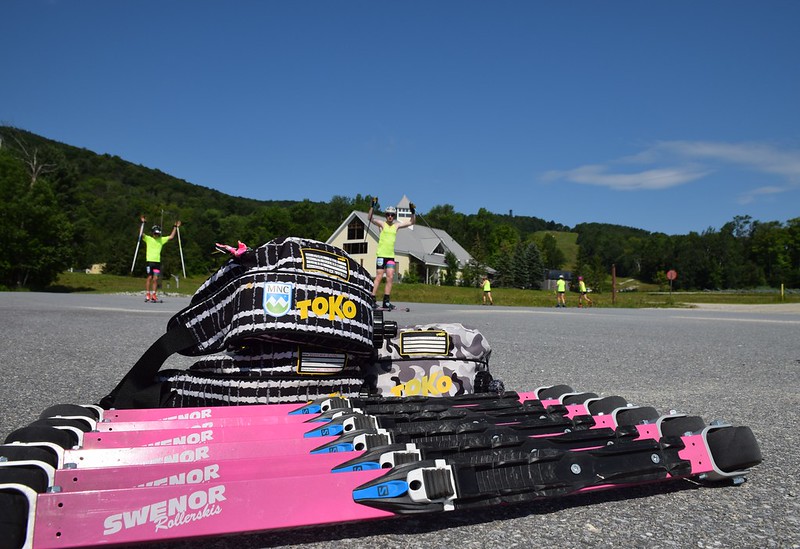
Check out a new page under the “Resources” tab on our homepage…daily training checklist! A quick list of some key items/apparel/etc to have with you at training sessions. Helpful no matter your age or experience:
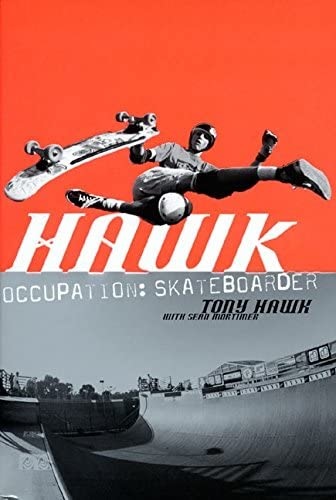
When I was in 8th grade a book came out called HAWK – Occupation: Skateboarder. I just double-checked my facts on Amazon and the year of publication was 2004, my final year of middle school.
Given the popularity of extreme sports in the edgy 90’s and early aughts, plus the monopoly Tony Hawk’s Pro Skater had on video games at the time, this book was the prime choice for “free reading” time in English class.
The title is a reference to the fact that skateboarding went from being a hobby for delinquent youths, all the way to a legitimate career and profession. I wouldn’t call Nordic skiing a hobby for delinquent youths; I’d say it’s quite the opposite, but I don’t want to generalize. Still, I was reminded of this book a few times this past week in ways that are worth sharing.
We’ve seen a pretty interesting progression already in the Junior squad this season, from the end of the season in March to where we are now, the early stages of June. With a successful season, a lot of energy was pent-up and just waiting for the start of regular training. The mentality was one of “more = better” which isn’t always the best way to approach endurance sport, especially in April and May when the racing season is 9 months away. I did a lot of head-shaking reading through Strava posts of silly rollerskis in April, overambitious runs in May, and predictable (but no less of a bummer) overuse injuries from track runners in June.
It has been a coaching challenge to channel and direct the flow of energy into the right places, modes, and mentalities. This is a process that probably never ends, even for the top athletes in the entire sport, but we’re improving. What has been a huge positive is the way this group of Juniors has become invested in the sport from a learning perspective. More than anything, these athletes identify as skiers and not just kids participating in a sport. I now answer questions at practice like:
“If I’m training this many hours in this year, and Klaebo is training so many more, what is the progression like to get there?”
“Generally, do you think I’m getting enough protein? Do you know how I can find more info on that?”
“I’ve got this work commitment on Thursday, so I can’t make practice. What’s a good alternative to do?”
Maybe not everyone is at Occupation: Skier levels right now (nor should they be), but a different kind of engagement with the sport is definitely appearing among many in this group.
Classic skiing with special guest Aidan Burt of UVM (oh, and of course MNC!)
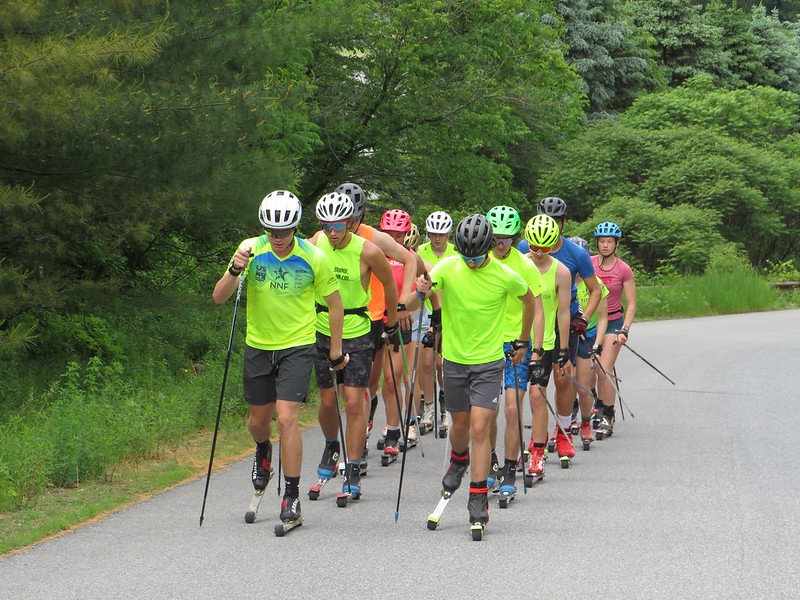
I was really impressed over the past week/weekend with the communication between team members, a few of whom organized training together when there was no official practice scheduled. Emma got to experience her first trip to the shores of Shelburne when Anders helped organize a ski down that way. After practice on Saturday morning, a group collaborated to find the best way to carpool over to the State track meet in Burlington to watch their MNC teammates compete. And Sunday there were all sorts of skis and bike rides happening in small groups across our chunk of Vermont.
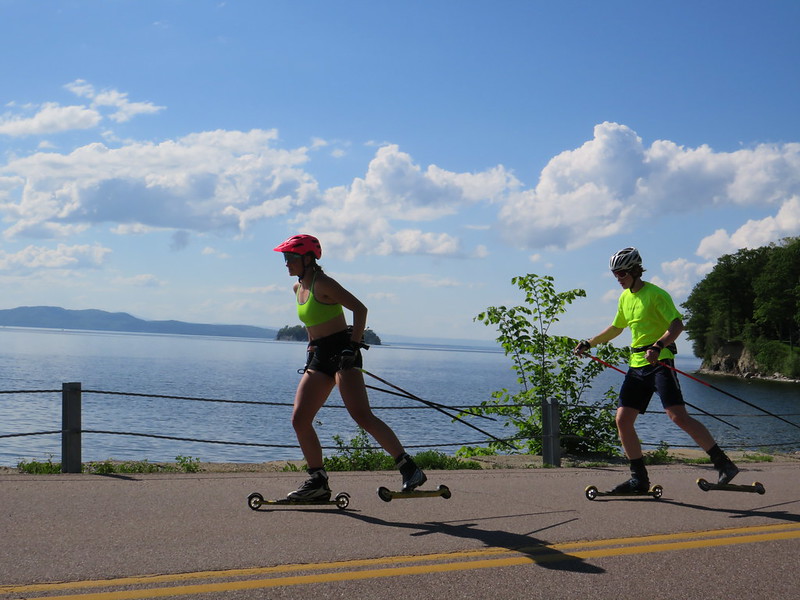
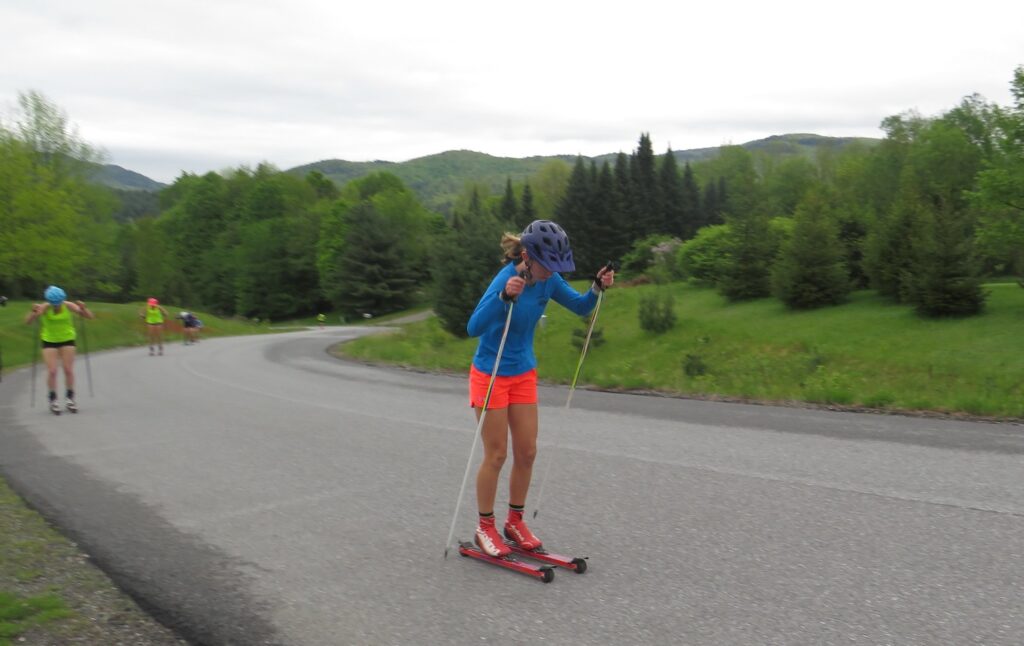
Yes, rollerskiing in Vermont is awesome!
And my final example of the level these skiers are operating at comes from a Zoom call with some collegiate coaches earlier in the week. We were discussing some recruiting and training, and I was asked if I had any questions. I asked what some of the workouts/technical/fitness aspects of college teams were that coaches felt incoming skiers were lacking experience and skill in. I want to make sure our athletes are able to jump right into college programs and succeed in achieving their goals without having to adapt to an entirely new learning curve.
The response I got was that, apparently, skiers come into college teams not having experience with L3/threshold training. Specifically, an example was cited of a club skier never having done L3 intervals longer than 5 minutes on-time. This was a bit surprising to me. I mentioned that we regularly complete the 3x5k Threshold session colloquially referred to as the “5k Project”:
This seemed to catch the college coaches by surprise. Even moreso when I mentioned that we often use that as one of the days to complete some lactate sampling as a way to further check on proper pace and effort.
Part of the reason I began having us try out the 5k Project was because I saw it on the Strava feeds of some pro athletes. Then I finally found the video above, suggesting that it was a national project and program implemented at all of the clubs on a “national level” and clubs with National Team athletes.
Umm…was I missing something here? Were we not considered a “national level club” eligible to be aware of what this workout was? It’s no secret I’m motivated by an underdog mentality, and there was no way MNC was not going to be missing out on an opportunity to implement the strategies and sessions being piloted by the lead coaches in our country.
By the end of last fall the 5k Project became a favorite workout, and I was often fielding questions about when our next one was taking place. While our Juniors may not often race 15 or 20k events yet, there’s no doubt that a 3x5k session can have a dramatic effect on 10k racing ability, as well as the perception of a 5k race itself. So yes, all of our skiers heading to NCAA teams will have lots of experience with time at threshold. They are certainly ready to take on the next steps!
Not everyone needs to identify as a skier in order to be a part of MNC. But it’s rewarding to see athletes fall in love with the sport more and more, and genuinely want to learn and improve in all sorts of ways. Sometimes that will mean the hard way, but it’s learning, nonetheless.
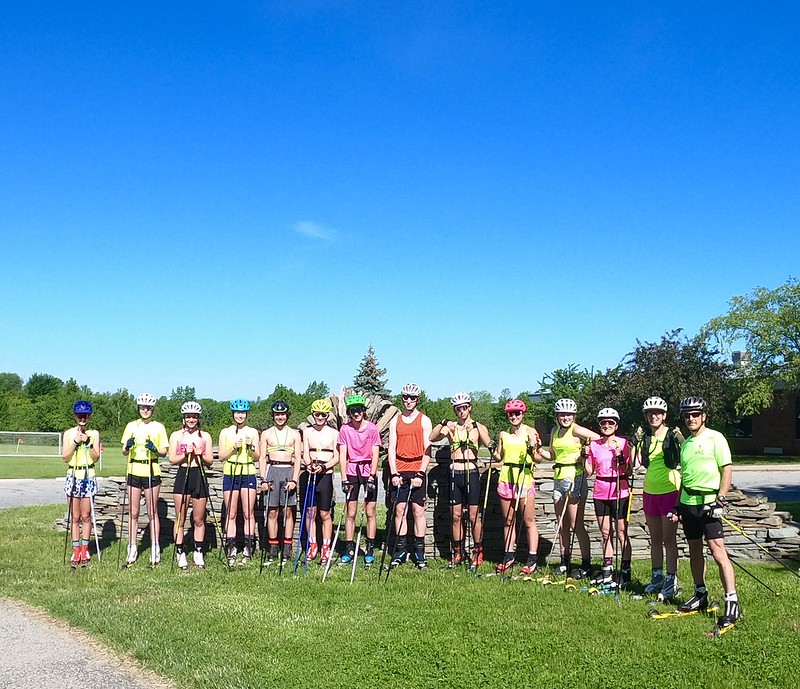
What a banner weather weekend for outdoor activities! We couldn’t have asked for a better day than the 25k in May, where a strong gathering of MNC Juniors and Masters met in Ferrisburgh to accomplish this now-traditional NENSA event.
25k in May squad
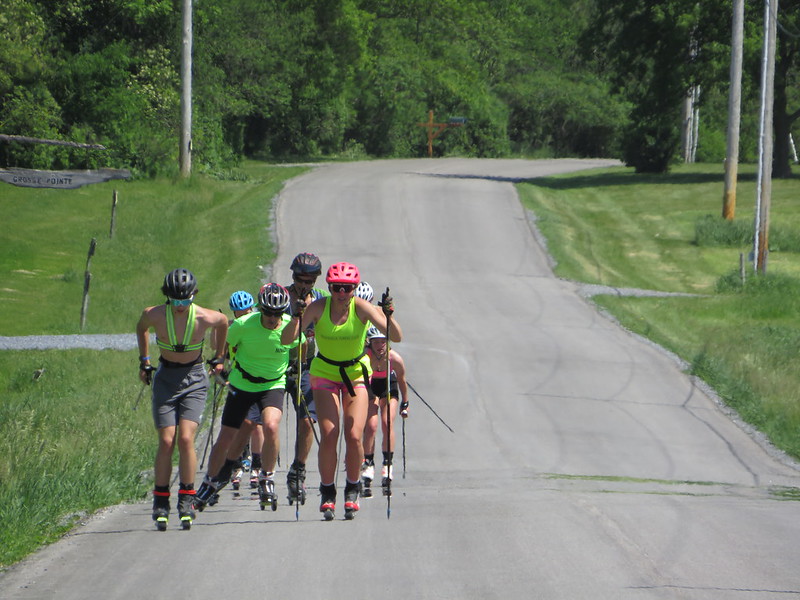
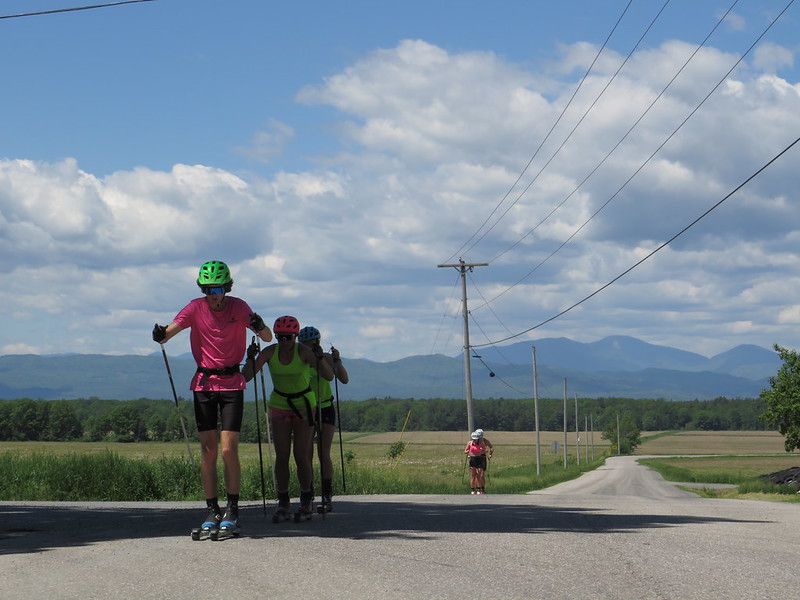
Despite the 25k challenge, most of the Juniors actually ended up doing 40k.
We’ve been through a few “generations” of high school athletes on this team, to the extent that skiers who were first Juniors when I came to MNC are now graduating college.
Different themes or attitudes have been driving factors for different generations, but this is the first generation that I believe sees themselves as SKIERS in terms of a key aspect of their identies. I mean that in a good way! For a coach, nothing is more rewarding than having skiers sit on the grass after a long rollerski and ponder what kind of training Klaebo was doing at their age in order to progress to where he is now. Or discussing different training camp ideas and dreams for themselves and the club to embark on.
Skiing like pros and thinking like pros
And most importantly, after 40k of rollerskiing on a hot day it seemed like nobody wanted to leave as we sat out on the grass scheming of the next big adventure. Eventually, we packed up and headed for the ice cream at Cookie Love, where the good times continued.
In addition to the Juniors, joining in on the rollerski fun were Katie, Tristin, Rick, and Steve. A pretty darn good showing for the club! All in all it looks like we realistically skied about 475-500 kilometers in total between us.
Masters Rick and Steve finishing up their skate roll
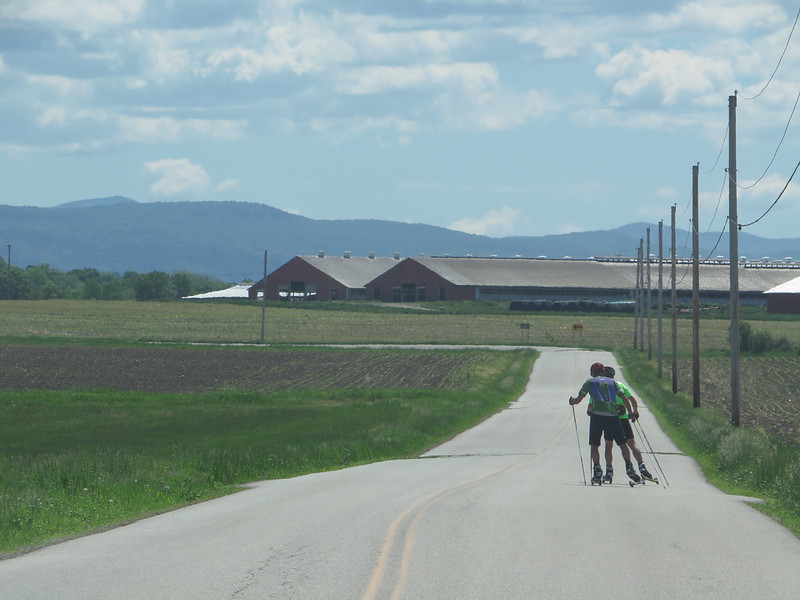
Flat roads (this was the same location as our 100k rollerski last year) make for easier long distance
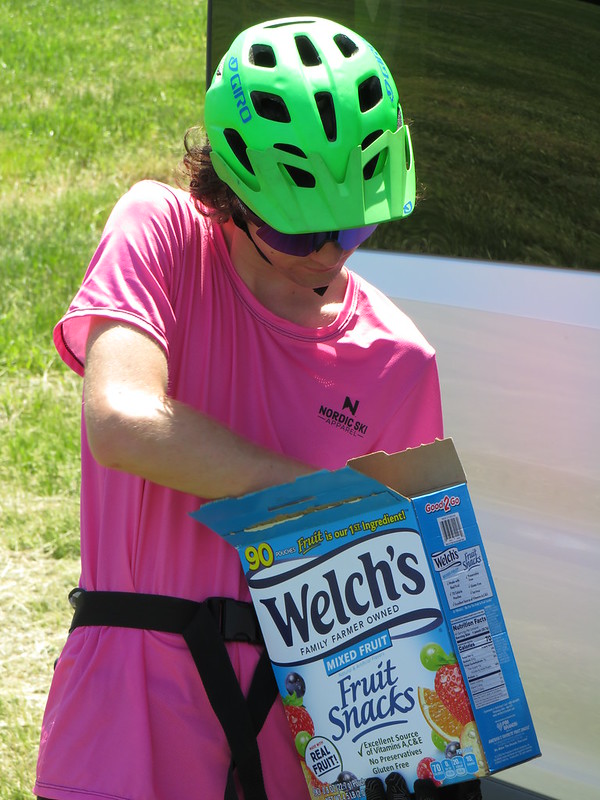
Fueling on long workouts is important, and this team goes through more fruit snacks than a 3rd grade field trip to the aquarium
With Covid continuing to impact our community both socially and athletically, we have updated our guidance and processes when it comes to MNC skiers experiencing symptoms and testing positive.
You are an MNC athlete and you just tested positive for Covid, now what?
2. Stay home, rest, do not exercise, help yourself recover as quickly and completely as possible.
3. Talk with your pediatrician. You will need to find out if your case requires an in person visit for clearance before returning to practice (this will depend on how sick you are and how long your symptoms last).
4. Return to practice when at least 5 days have passed since you tested positive (the day you test positive is day 0) andyou haveno remaining symptoms (no congestion, no cough, no headaches, your energy feels good), andyour pediatrician has said you can return without a full exam.
If you require a exam or EKG this must be done and a letter from your doctor will need to be submitted.
5. You will be expected to wear a mask (even while exercising if you are doing so within the group) until you are past day 10 from the start of your symptoms. Individuals who have had Covid are still able to spread virus after day 5, even once they are starting to feel better: this is CDC guidance that states if you are leaving quarantine after day 5 you should be masked.
The time has come for the first round of dryland testing for Juniors. Our tests include a 1km uphill double pole test, a 3000m track run, the Bolton uphill run test, and a strength test (which may-or-may-not be obsolete by modern biomechanical and functional movement standards).
Why test? And why in May, when we’re so far away from race season?
The goal is to measure improvement and development…and make sure that we keep in touch with “race mode” even if our main comparisons are with individual progress rather than the rank of skiers on the team.
The first round of tests can be brutal, because it’s the longest span of time we go in the year without a race. For anyone not doing track, the last race effort was likely in mid-March. Having a mental and physical break from racing is critical, and it’s why I often am cautioning athletes to be very careful if jumping right from ski racing into a busy track season: track races put a lot of demand on the body and mind right as the full weight of the ski racing season comes crashing down and the need for a more relaxed season is most pronounced. That being said, we’ve obviously got some phenomenal runners out there crushing the spring track season!
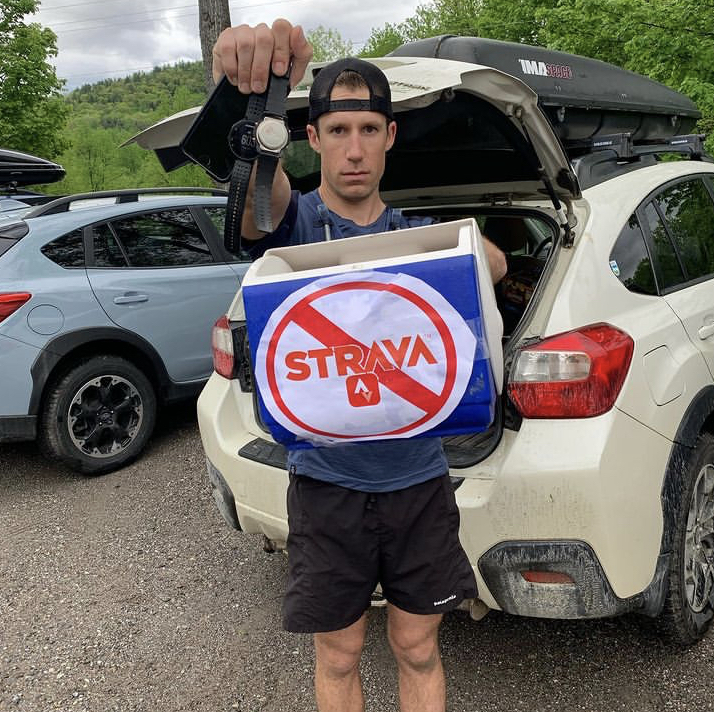
Ironically, the testing week started out in the totally opposite way: a workout with no times, no data, and no photos. It was a “NO STRAVA DAY” in which I brought out the SDC (Strava Device Container) and collected all of the instruments of GPS tomfoolery. The only watch for the workout was the one I brought with me: a $4 watch from the department store that didn’t even have the time-of-day right, but had a working stopwatch. Team members bore witness as I turned my phone off and put it into a ziplock baggie (it was raining) to carry in the running vest along with way…its purpose was strictly for safety reasons in the event of an emergency.
Strava is fun and I use it myself, although I’ve tried to cut back a bit. The issue is when any athlete gets compulsive about workouts and data…in the best cases, Strava acts as a social media distraction. In the worst cases, the quest for the minutiae can suck all the joy out of sport. So the hope is to implement a few days here and there when we focus on just being out doing what we love, and maybe discovering NEW things to love about training. For anyone interested, here are a few “discussion piece” articles I sent out to the team after our low-tech trail run.
The mental game played a pivotal role in the double pole test only a few days later, it turned out. While PR times did occur, the general attitude and performances were somewhat muted after the conclusion of the event. Many felt like they couldn’t push as hard as they wanted to, had a tough time getting into the groove, or just weren’t feeling strong and fit. This strikes me as a learning opportunity in a couple of ways:
We don’t want to be at our best in May, and the times and feelings were a good motivator that gives targets to shoot for throughout the dryland season
Mentally, this was the first race in a long time. It was like ripping off the Band-Aid for what it takes to be in the psychological sweet spot balancing nerves/excitement/pacing/positivity/energy
Maybe most importantly, we’re coming off what was without a doubt our best season as a ski club. After a season full of highs and great results, it’s easy to get in a rhythm of expecting greatness at every turn. The thing is, you ALWAYS have to work for great things, and can never take them for granted! So in the best way possible, this is a reminder that nothing comes easy.
Kate and Elsa in the DP test, with chasers behind
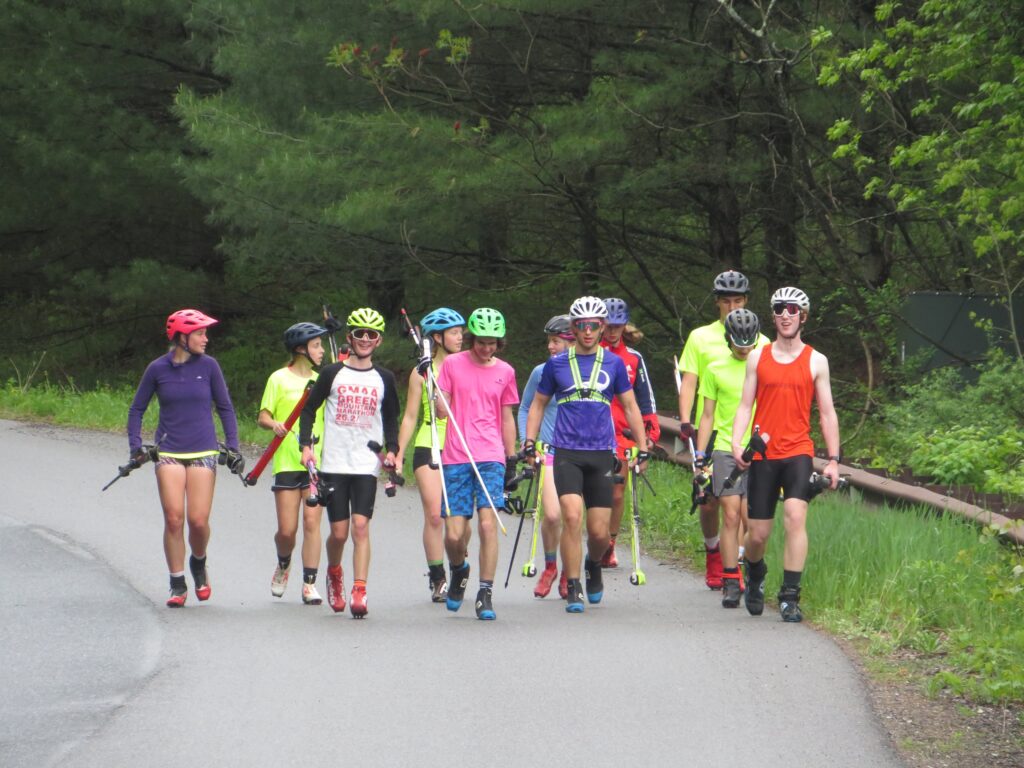
Some have tried (and not all have succeeded) rollerskiing down Greystone. In a group, we stick to walking!
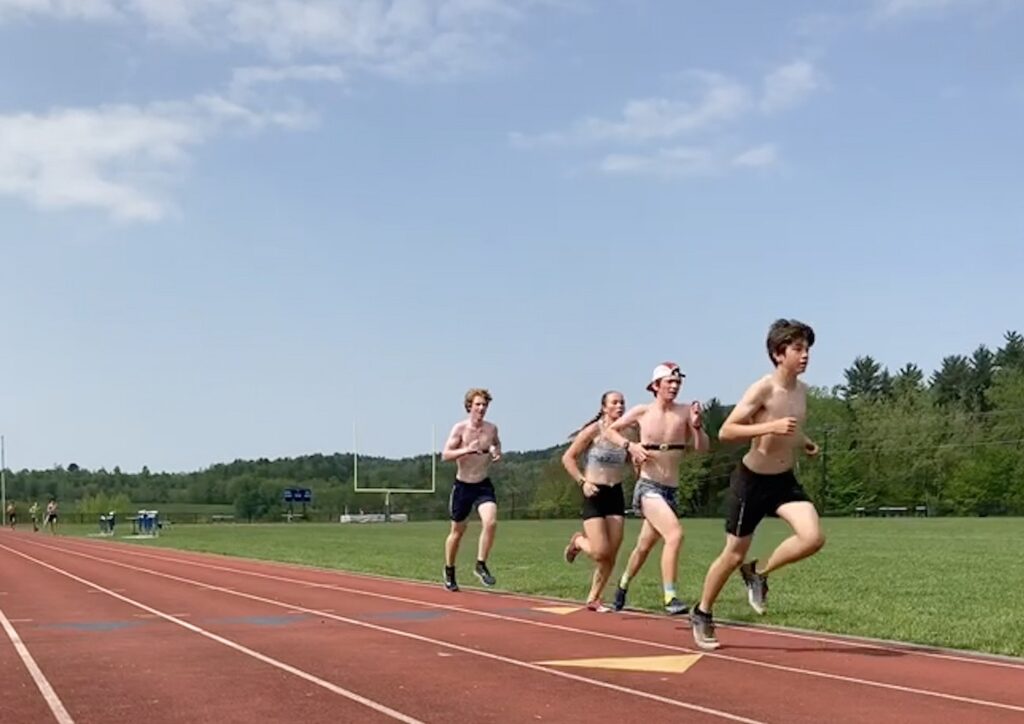
The 3000m run Saturday morning was hot and humid, but much like a cold or rainy winter race you can’t just call it off because conditions aren’t perfect. With some times that clearly show we’ve been running more than rollerskiing this spring (as is the intent) there’s a lot of confidence that it won’t take much more rollerski work to bring down the DP test times when we next hit that hill!
Jonah followed closely by Taylor, Emma, and Anders in the 3k
A reminder that I’m trying to upload more photos of training sessions to our Flickr page where folks can view and download them, as well as see even more of what our training looks like!

 the year of publication was 2004, my final year of middle school.