
I was a high school MNC athlete in the summer of 2006 and 2007. Back then, the extent of the club for skiers in my position was a twice-weekly summer rollerski group at the Camp Ethan Allen Training site in Jericho. Camp Ethan Allen is a military firing range that specializes in testing high-powered explosive weaponry from institutions like Lockheed Martin and General Dynamics. But Camp Ethan Allen, known colloquially as “The Range”, also had a rollerski track. Because a biathlon team was connected to the military, and biathletes used weapons too.
In the summer, high school Nordic skiers who knew how to rollerski would get together on Tuesday and Thursday for intervals, drills, and pushups on the grass inside the penalty loop.
This was long before I had a deep understanding of training zones, volume weeks, or FIS points. To me in that first year with MNC, training was simple: You finished your day job (for me it was mowing soccer fields), showed up at the Range, did a laundry list of tiring stuff on rollerskis, and drank chocolate milk in your Subaru on the drive home.
The mastermind behind all the hard work was Murray Banks. I didn’t grow up in the Jericho/Underhill area, so I wasn’t impacted in my early years by Murray the way many young skiers in the shadow of Mount Mansfield were. But I was certainly inspired by him. While Duncan Douglass may have been building a following with his “Jacked-Up Old Man” blog in the mid-aughts, Murray was the only jacked up old man I knew in person. His hair was white, and his voice rang with years of wisdom, but he was on rollerskis with us doing the same workouts no matter how challenging. My first time skiing down the “S-Turn” loop, the most challenging trail at the rollerski track, came from following Murray and not realizing we had taken a left where we usually went straight. At my very first Eastern Cup, a 15km skate race, I was relieved to be one of three members from our core summer group to finish ahead of Murray. He beat the other three.

Before the State Meet my senior year, Murray sent an email to our group from the summer…there was no fall or winter MNC programming for Juniors back then, so this was actually the first I’d heard from Murray in a few months.
“Congrats on competing in these races,” he said.
“Be confident in your training, and push hard. And don’t forget to tighten your boots. Tight boots make for good control!”
The first few parts of that quote are paraphrased, but not the last sentence. I remember that word-for-word from sometime in February of 2008, and I know why: it’s because I find myself repeating it often.
How many times have I put on ski boots since that race in 2008? How many times have I pulled a little plastic tab to cinch a closure, or wrapped the velcro of a skate cuff above my ankles? How many bindings have I pried up and snapped shut? It’s beyond comprehension, and yet whenever I’m doing it at an “important” ski event, Murray’s words pop into my head.
Murray was a public speaker in his non-skiing life. His charge was to travel around to schools and businesses and leadership summits to motivate and inspire people with positivity. Doing so in front of a crowd is inherently grand. I’m sure Murray had many key turns of phrase and quotable quips to help business leaders close a big deal, or rally a nervous 7th grader to stand up to a bully. Tightening your ski boots was not likely one of them. But that doesn’t mean it’s not an important charge.
Now that I am the coach and not the athlete, I am often grasping for ways to make the big concepts more relatable. This past season I spent a lot of time reminding athletes “control what you can control, and not stress about what you can’t.” There’s a lot of factors that go into every competition, no matter your sport, but skiing manages to have a near-infinite list of potential pitfalls for even your simplest 5km freestyle.
You know a simple way to encapsulate the big idea of managing overwhelming variables?
“Tighten your boots. Tight boots equals more control.”
I would ski with MNC here and there during my summers home from college, as our core group spread out among various EISA teams, or moved on from racing entirely. I graduated from college and slowly moved on from taking my own training so seriously. I became a lot more interested in helping others train and grow, and spent a few years as an assistant coach. When that gig was coming to its natural conclusion, I knew that coaching was the path I wanted to follow.
It was Murray who I reached out to about any connections he might have, and directions he might point me in as I searched for a role in the ski world.
“It’s funny you ask” he replied, “because I want to run something by you…” that was almost exactly 10 years ago, and today we are still talking about Murray’s impact, his legacy, and his words.
The ski world is going to be a different place without Murray, but whatever challenges arise we know we have the power to control what we can. Sometimes it’s a big decision about our future, sometimes it’s a direction on a ski trail, and sometimes it’s how we tighten our boots.
Murray Banks’ Fasterskier Piece: “Letters to my Younger Self”
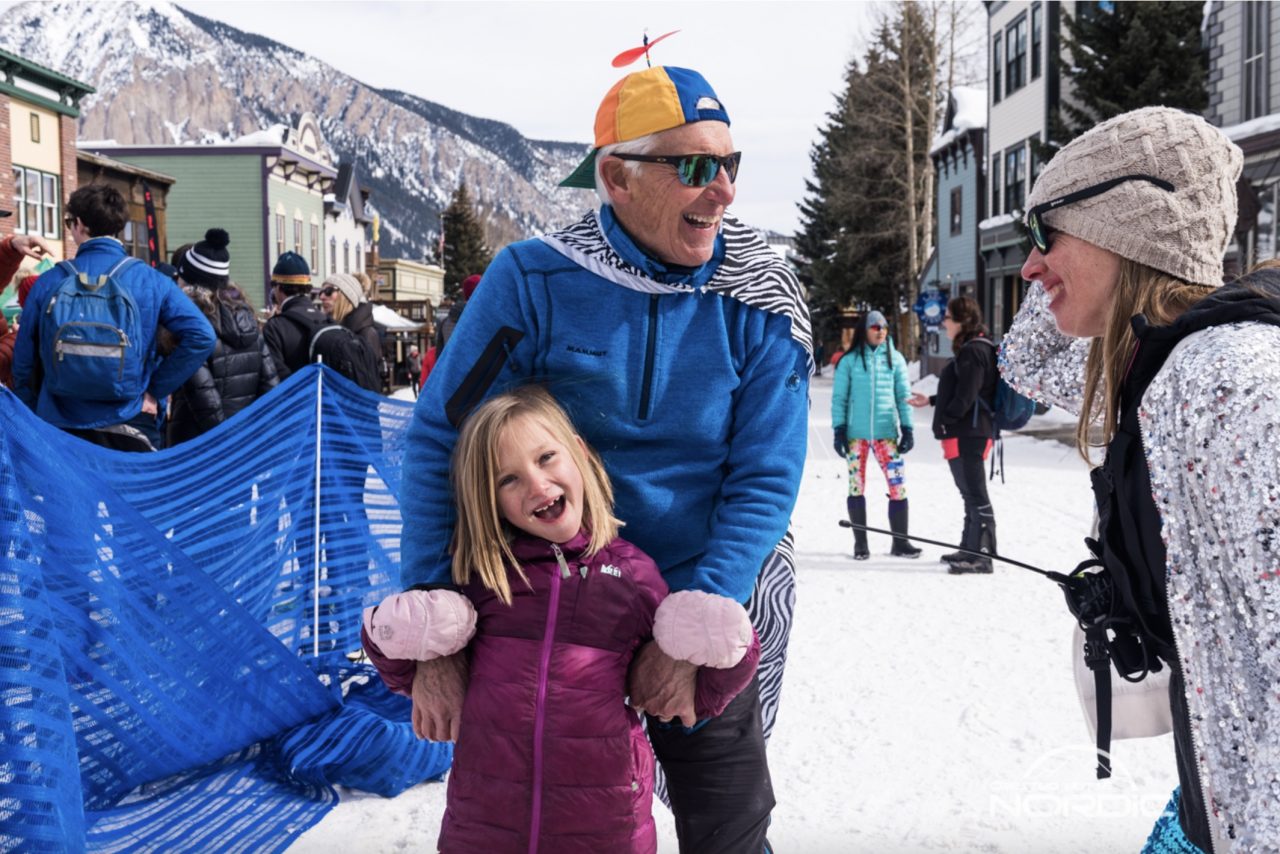
Photo: Xavier Fane / CB Nordic / Fasterskier
Comments are closed.